The Eli and Edythe L. Broad Institute of Harvard and MIT has been awarded a $32.5 million grant from the Klarman Family Foundation to support a new collaborative effort focused on deciphering how human cells are wired.
The grant will allow the scientific community to expand its understanding of how biological decisions are made in health and disease, paving the way for major treatment breakthroughs.
The Klarman Family Foundation grant will launch the Klarman Cell Observatory at the Broad Institute, which will foster groundbreaking discoveries and technological advances in cell circuit research. It will continue to propel advances in the experimental and computational methods needed to understand cell circuitry and establish their broad applicability by studying a variety of cell types. Observatory researchers will collaborate with researchers across the Broad and around the world to shed light on the inner workings of these cells.
The Klarman Cell Observatory will be led by Broad Institute core member Aviv Regev, who has pioneered a new paradigm for defining cellular circuitry. Over the past five years, Regev and her colleagues have made significant strides in systematically deciphering the circuits of two key human cell types: dendritic cells, a type of immune cell, and the stem cells that give rise to blood cells. This work not only shed light on the cells’ biology and the systems in which they function, but it also served as a proof-of-principle for how to approach such projects on a large scale.
The Klarman Family Foundation is a private philanthropy based in Boston.
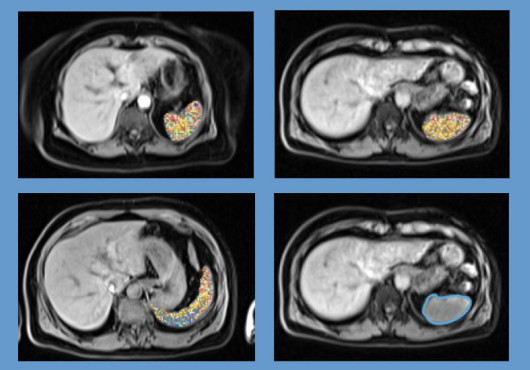
Dana-Farber Cancer Institute has been awarded a $10 million grant from the Massachusetts Life Sciences Center (MLSC) to support the expansion of its pioneering cancer imaging research program.
The MLSC grant will help fund the establishment of the Molecular Cancer Imaging Facility, a $20 million research initiative to develop new molecular imaging probes. The facility will help physicians to better diagnose and characterize cancer, choose targeted therapies, monitor treatment efficacy and improve the outcomes of adult and pediatric patients with cancer. Funding for the grant comes from the state’s 10-year, $1 billion Life Sciences Initiative, proposed by Gov. Deval Patrick in 2007 and approved by the Legislature in 2008.
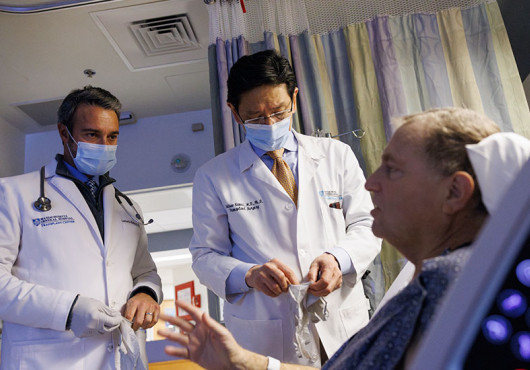
Non-invasive imaging methods that can visualize, characterize and measure biological processes at the molecular and cellular levels in living systems (“molecular imaging“) are a critical step to speeding the pace of new therapies, according to Andrew Kung, director of preclinical imaging at Dana-Farber and HMS associate professor of pediatrics.
The new Molecular Cancer Imaging Facility will complement and expand several of Dana-Farber’s basic and clinical research enterprises that are focused on the development of targeted cancer therapies. This includes the Center for Biomedical Imaging in Oncology, which houses the Lurie Family Imaging Center; the Center for Novel Experimental Therapeutics (C-NExT); and Profile, one of the country’s most extensive cancer genomics research projects, done in partnership with Brigham and Women’s Hospital, which seeks to accelerate the development of personalized cancer treatments. Dana-Farber has committed to making the facility available for use by small businesses conducting related research in Massachusetts.
The Forsyth Institute has been awarded a $750,000 tuberculosis (TB) biomarkers grant through the Bill & Melinda Gates Foundation’s Grand Challenges in Global Health program. Antonio Campos-Neto, head of the Global Infectious Disease Research Center at Forsyth, will pursue an innovative research project to identify and validate TB biomarkers, titled “Validation of the diagnostic utility of Mtb protein biomarkers found in urine of TB patients.”
Campos-Neto is working on the development of an antigen detection assay for the diagnosis of TB based on a single urine sample. His research focuses on the diagnosis of active TB through a technique that could be similar to a simple home-pregnancy test.
The Gates Foundation’s Grand Challenges in Global Health program seeks to overcome persistent bottlenecks in creating new tools that can radically improve health in the developing world. The Grand Challenges TB biomarkers program provides funding for groundbreaking research into TB biomarkers for the development of a low-cost, simple to use tool that can quickly and accurately diagnose TB in developing countries.
Cambridge Health Alliance and the Judge Baker Children’s Center are among 13 Massachusetts organizations that have been awarded a total of more than 1.5 million in grants from The Blue Cross Blue Shield of Massachusetts Foundation to develop and implement innovative cost containment initiatives as part of a new grant program, Making Health Care Affordable.
Moderating the growth of health care spending is critical to sustaining the gains that Massachusetts has made in access and coverage over the past five years. Each of the grants holds promise for slowing the growth or reducing public and/or private health care spending in Massachusetts while also increasing quality.
The Alliance Foundation for Community Health, the fundraising arm of Cambridge Health Alliance, received a $125,000 grant to develop a new method of identifying youth at risk for low quality/high cost mental health treatment. The sample for this study will be drawn from the 101,000 youth under age 20 insured by Network Health. The project, “A Collaborative Practice Model for Improving Pediatric Mental Health Value,” will also look within diagnosis groups to compare treatments and expenditures across race/ethnicity, language, geography and other characteristics. In the second phase of the effort, the project will identify primary care providers who have the largest number of high-expenditure youth and work with them and families to develop better more cost-effective approaches to treatment.
The Judge Baker Children’s Center was awarded $94,703 for its Modular Approach to Therapy for Children (MATCH). Unlike most evidence-based treatment approaches, which focus on a single condition, MATCH is designed for children who have multiple complex disorders. JBCC estimates that 80 percent of the pediatric caseload in community clinics is made up of children with some combination of anxiety, depression, post-traumatic stress and disruptive conduct. MATCH has been tested and found to be effective in randomized clinical trials. This grant will help implement MATCH in four outpatient clinics in the greater Boston area as a step toward bringing the model to scale in the state.
Massachusetts Eye and Ear Infirmary has been awarded a $30,000 Medical Student Eye Research Fellowship from Research to Prevent Blindness (RPB). The award will support the work of Mamta Shah.
The award will allow Shah to participate in research under the mentorship of Mass. Eye and Ear Glaucoma Service Director and HMS Associate Professor of Ophthalmology Louis Pasquale in collaboration with Suzanne Freitag, director of the Mass. Eye and Ear Ophthalmic Plastic Surgery Service and HMS lecturer on ophthalmology. Their study will pursue the development of an algorithm to objectively evaluate anatomical changes in the eye believed to be associated with certain types of eye drops used to treat glaucoma.
Joslin Diabetes Center has received a $5 million grant from the Massachusetts Life Sciences Center. The grant is among the largest ever awarded to support diabetes research in Massachusetts.
Joslin will match the Center’s grant with $5.8 million raised from donors. The total $10.8 million will be used to build a comprehensive Translational Center for the Cure of Diabetes at Joslin’s location in Boston’s Longwood Medical Area.
The Translational Center for the Cure of Diabetes encompasses 16 projects that bridge clinical research, clinical care, and basic research with translational programs to ensure that Joslin continues to advance its “clinic to research to clinic” solutions. This cross-pollination of clinical and research disciplines is critical because the cure for diabetes is a vexing goal due to the complexity of the disease, as it has different forms and complications that affect the eyes, kidneys, nerves and the cardiovascular system.
The project will renovate nearly 20,000 square feet of space and is expected to create approximately 50 construction jobs beginning in FY13 and approximately 50 permanent jobs in the life sciences.
Researchers at the Schepens Eye Research Institute, Massachusetts Eye and Ear, have been awarded a five year-grant of more than $2.4 million from the National Eye Institute to understand the origins of eye allergies.
Daniel Saban, HMS instructor in ophthalmology, is the principal investigator for the project, “Cellular and Molecular Mechanisms that Contributed to Ocular Surface Allergy.”
Nearly 30 million American suffer from allergies that afflict the surface of the eye, resulting in significant health care costs. Current drug treatments such as antihistamines target end-stage biological events that cause allergies but do not cure this condition.
The research funded by this grant seeks to investigate early-stage events that cause allergy, which may help to uncover more effective targets for treatment of ocular allergies.