
New evidence from HMS researchers brings to light a novel role for the transcription factor p53, famous for its tumor-suppressing capabilities. This oncological celebrity was found to be part of the tanning response to UV light, according to findings published in the March 9 Cell. Though p53 upregulation following UV stimulation has been known for about 25 years, its role in skin pigmentation has been left unexplored.
David Fisher, HMS professor of pediatrics at the Dana–Farber Cancer Institute, previously found that UV light induces pigment-producing melanocyte-stimulating hormone (MSH) in keratinocytes. The finding, reported in the Sept. 21, 2006, Nature, overturned the belief that UV induces pigmentation by acting directly on melanocytes rather than keratinocytes (see Focus, Oct. 13, 2006).
Yet the researchers had not uncovered the molecular connection between UV stimulation and MSH production. To determine the players involved, the Dana–Farber team scrutinized the POMC gene, from which MSH is derived, looking for a regulatory DNA element common to the human, rat, and mouse that would identify the transcription factor linking UV stimulation with subsequent MSH release. They noticed the sequence for p53 and thought, “Of course!” said Fisher, of this protein commonly mutated in cancer. The tumor suppressor has long been known to respond to DNA damage, but a connection to the common form of DNA damage induced by sunlight had not been studied in this context. Normal p53 function includes activating genes that stop cell growth and induce apoptosis.
Fisher and his team exposed human and mouse keratinocytes to UV light and found that p53 increased three hours before MSH increased, suggesting that p53 signals the activation of MSH. “The timing fit,” Fisher said. Overexpression of p53 also led to an MSH surge.
While it appeared that p53 was sufficient to trigger MSH, it was unclear whether the protein was necessary to induce the hormone’s release. To determine this, the researchers used a variety of inhibitors to block p53 expression. They found that with the protein blocked, MSH did not increase in response to UV light. And the ears and tails of p53-lacking mice did not tan when exposed to UV light, whereas the ears and tails of the p53-possessing wild types turned dark brown.
MSH is cleaved from the large, multicomponent gene POMC, which codes for a variety of biologically active peptides. Of note to Fisher, UV-responsive beta-endorphin resides among POMC’s 241 amino acid residues. Because p53 stimulates beta-endorphin, Fisher speculates that this endogenous opiate might be responsible for pain relief following sunburn and the addictive qualities of tanning that promote sun-seeking behavior.
Trending News

Pilots, Flight Attendants Have Greater Risk of Radiation-Related Cancer Death Than Other Professions
Findings support efforts to protect U.S. aircrews from cosmic radiation exposure

Rare Inherited Genetic Mutation Is One of Strongest Indicators Yet for Lung Cancer Risk
Influence of EGFR variant could expand screening guidelines
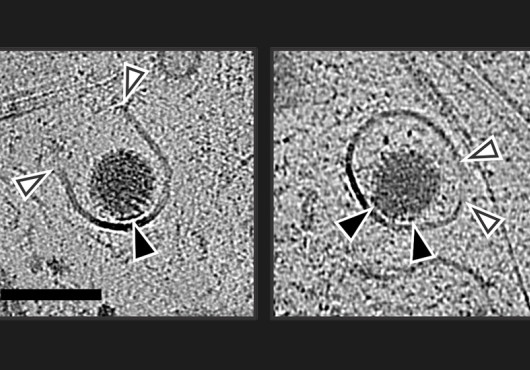
‘Molecular Movie’ Fills in Blanks of How Non-Enveloped Viruses Infect Cells
Cryo-ET of rotavirus answers decades-old virology question, could inform drug delivery techniques