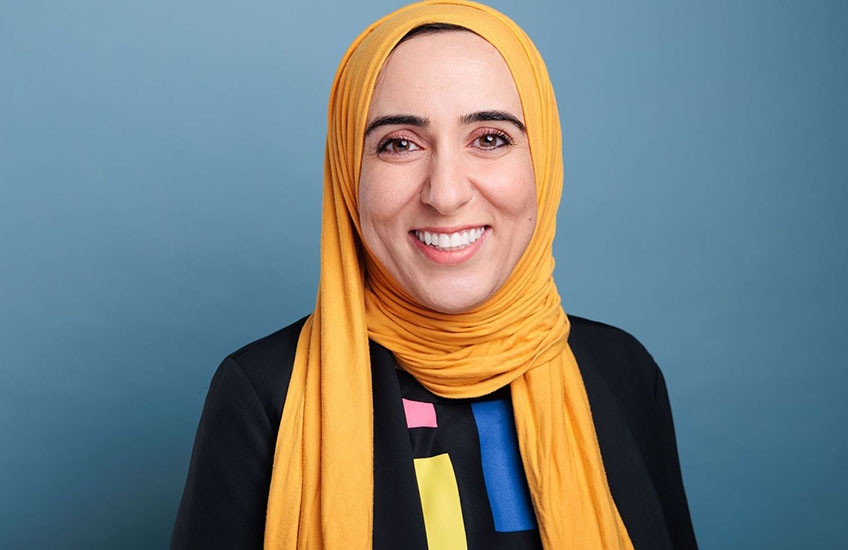
If you had told Altaf Saadi when she was an MD student at Harvard Medical School that she would one day direct the office that oversees those students’ research studies and scholarly experiences at the School, she would have been surprised.
“I didn’t think there was room for my interests in what is typically understood as ‘medical research,’” she recalled.
As a student, Saadi had been set on caring for patients in community-based settings with a focus on advancing equitable access to care. She had not planned to conduct research during her career, but natural curiosity led her to investigate all kinds of topics in clinical, laboratory, community health, global health, health policy, and medical education spaces.
On Jan. 1, she stepped into the role of faculty director of the Office for Scholarly Engagement (OSE), which coordinates required and optional research projects for students pursuing MD degrees at HMS. She oversaw her first Soma Weiss Student Research Day on March 17.
Having developed such a broad view of how and where research can be carried out, she can appreciate the myriad ways students may want to pursue independent, mentored research.
Through the OSE, students can tackle just about any health-related topic they can imagine, whether their niche is improving patient care, developing therapeutics or medical devices, advancing basic science or translating it to clinical care, exploring local or global community health issues, becoming entrepreneurs, communicating science and medicine, reforming health systems and policy, or another area. Along the way, the office helps them find mentors among the School’s more than 12,000 faculty members.
Harvard Medicine News asked Saadi about the OSE and her new role, including the vast opportunities for MD students and HMS faculty.
Harvard Medicine News: What do you like about working with MD students on research?
Altaf Saadi: Research is such a joyful part of my career. I love the curiosity, the constant learning. It feels like I’m on an adventure and a never-ending search for answers. HMS students have similar curiosity, and I have really enjoyed working with them on their scholarly projects.
I do a lot of policy-oriented research, and helping students pair their research with much larger policy-level impacts is also appealing to me.
HMS students think big and boldly, they want to address societal issues, and they ask themselves how they fit within the world at large and how they can contribute.
In this role, I can merge this love I have for scientific and policy research with the wonderful experiences that I’ve had working with HMS students and can encourage them to think about research in terms of their own careers.
HMNews: What perspectives and approaches do you bring to the role?
Saadi: Coming into med school, I had zero intention of pursuing research in my career. But I kept an open mind. My research experience has been interdisciplinary and even interfacing across sectors, for example, working with attorneys or creatively disseminating my research in videos. I explored so many different dimensions of research to get to where I am now — doing health services and policy-oriented research with a focus on community engagement. But it took me a while to get here.
This journey has expanded my own ideas about research and given me a deep appreciation of what it can look like for someone else. The perspective I bring is thinking about scholarly engagement expansively, beyond traditional approaches.
HMNews: So, what can research and scholarly engagement look like at HMS?
Saadi: It can involve research for a startup, a health care business idea, a documentary film, a policy brief, or an amicus brief about an issue being litigated in the courts.
OSE can support students who want to pursue more traditional avenues in basic, clinical, or translational research, but there is increasing recognition that we have to venture outside of traditional academic spaces. For example, it’s possible for the product of student research to be a peer-reviewed publication, or maybe it’s a peer-reviewed publication paired with a patent or an op-ed. These things don’t have to occur in isolation of each other.
HMS has a special ecosystem that can facilitate this expansive view, because we have faculty who have ventured into all these spaces: being entrepreneurs, combining medicine with the humanities or the arts, or improving global health.
HMNews: What are the benefits of scholarly engagement, even if MDs go on to focus on patient care and do not do research?
Saadi: I’ll begin by saying it’s not called the office of research, but the Office of Scholarly Engagement. I love that the name embraces and recognizes that students can engage in scholarly inquiry that’s applicable for anyone in medicine, even if they decide to pursue patient care or medical education. It doesn’t necessarily need to be research in an academic box.
The skills that are required to develop and fulfill a scholarly project can transfer to any career.

If a student becomes a physician who focuses on taking care of patients, they might encounter a patient who has treatment failure or some other challenge to their improvement. The kind of general approach they practiced in their scholarly project can help them figure out the issue or come up with a plan to address it. This could involve reviewing the scientific literature, identifying gaps in the literature, partnering with colleagues, and integrating that information to devise a solution.
HMNews: What would you like students to know about how you and your staff support their scholarly engagement?
Saadi: There is truly an incredible number of resources available to HMS students. It might even feel overwhelming sometimes. Our entire OSE team can help them navigate this and think through where to start and who to turn to.
I am new to the office, but members of my staff and other faculty who have been part of the larger OSE family and mentorship community have years of institutional knowledge that they’re excited to relay to students.
We also offer some funding for projects, whether it’s during the summer or a fifth research year.
It feels like we have something for everybody who comes through the door.
HMNews: What would you say to faculty about serving as mentors through OSE?
Saadi: Don’t be shy about reaching out if you aren’t already integrating HMS students into your lab or research projects. Our office can help you think through how students might fit into your work.
Faculty members, including myself, have found working with medical students incredibly fulfilling and a nice addition to their larger career portfolio. The general feeling is that they appreciate the stronger connection with the medical school, its larger community across institutions, and working with bright, talented students.
I think a recurring theme is that there are more opportunities or resources than people recognize. So we have been thinking about additional ways to expand and disseminate them, to both students and faculty.
HMNews: What else would you like to share about yourself so our readers can get to know you a little better?
Saadi: I love traveling; going on hikes; and all things nature, poetry, and spending quality time with my husband and our two young daughters (soon to be three young daughters!).
Being out in nature is like seeing a thousand little miracles. It makes me remember how much beauty is all around me, especially when the world feels broken in many ways.
I am inspired by the resiliency of the individuals I serve in my clinic and through my research, especially refugees and immigrants, who are hope and courage personified.
This interview was edited for length and clarity.