The death sentence that too often accompanies a diagnosis of extensively drug-resistant tuberculosis (XDR-TB) can be commuted if an individualized outpatient therapy program is followed—even in countries with limited resources and a heavy burden of TB. A study conducted in Peru between 1999 and 2002 shows that more than 60 percent of XDR-TB patients not co-infected with HIV were cured after receiving the bulk of their personalized treatment at home or in community-based settings. The paper appeared in the Aug. 7 issue of The New England Journal of Medicine.
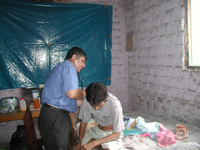 Carole Mitnick, an HMS instructor in the Department of Global Health and Social Medicine, along with other researchers from HMS, Brigham and Women’s Hospital, Partners In Health, HSPH, and the Massachusetts State Laboratory Institute (MSLI), in conjunction with Peru-based organizations Socios en Salud, the Peruvian Ministry of Health, and Hospital Nacional Sergio E. Bernales, had already demonstrated that aggressive, outpatient treatment could cure multidrug resistant tuberculosis (MDR-TB), which is resistant to two first-line anti-TB drugs. That pilot has been adopted as a national program by the Peruvian government.
A similar protocol was used for the recent study of XDR-TB, which is caused by TB bacteria resistant to isoniazid, rifampin, and members of at least three of six classes of second-line drugs. A total of 810 patients with unsuccessfully treated TB were referred for free individualized drug treatment and additional services as needed, including surgery, adverse-event management, and nutritional and psychological support. Results from sputum culture and drug-susceptibility testing performed at the Massachusetts State Laboratory Institute helped clinicians develop regimens with five or more drugs to which the infecting strains were likely to respond. The 60.4 percent cure rate in the XDR-TB group was better than most outcomes reported from hospital settings in Europe, the United States, and Korea, Mitnick said.
“Our study shows that effective treatment does not require hospitalization or indefinite confinement of patients,” she said.
Community-based interventions also protect hospital patients and staff from transmission of TB and allow TB patients to remain with their families during their protracted treatment. If hospitals have to accommodate only those with serious medical needs, this intervention can be implemented widely and earlier in the disease course. The benefits would be profound, Mitnick said. In addition to reduced morbidity and mortality among patients, an epidemiologic impact could be expected: a decrease in the incidence of resistant TB has been reported only in places where universal screening and treatment for drug-resistant TB are offered at first TB diagnosis.
Conflict Disclosure: The authors declare no conflicts of interest.
Funding Sources: The Bill and Melinda Gates Foundation. Additional collaborators in the delivery of care included the U.S. Centers for Disease Control and Prevention, the World Health Organization, and the U.S. Task Force for Child Survival and Development