Harvard Catalyst, the Harvard Clinical and Translational Science Center, has announced a reorganization of its education program. Elliott Antman, HMS professor of medicine at Brigham and Women’s Hospital, will join current education program director David Golan as director of the Harvard Catalyst Program for Postgraduate Education in Clinical and Translational Science. Antman is a clinical investigator in the field of cardiology who has conducted numerous clinical studies that have changed the standard of care for patients throughout the world. He has been at BWH and HMS for more than 30 years.
As director of postgraduate education, Antman will design and implement a comprehensive, integrated program of education, training, mentoring and career development for physicians, PhD scientists and other healthcare professionals involved in clinical and translational science. The new program for physician and scientist training will be widely available throughout the Harvard community.
In the Harvard Catalyst Education Program, Golan’s position will be director of the Harvard Catalyst Program for Graduate Education in Clinical and Translational Science. In this role, he will continue to oversee the Leder Human Biology and Translational Medicine Program and other PhD programs that involve clinical and translational science. He will work with HMS dean for education Thomas Michel and HMS dean for medical education Jules Dienstag to enhance engagement of undergraduate students and medical students in disease-based research at HMS and the affiliated healthcare centers, and he will also oversee the Harvard Catalyst Colloquium Series.
Golan and Antman will work closely together to ensure that existing and future master’s degree programs in clinical and translational science are optimally aligned with the other graduate and postgraduate programs in the Harvard Catalyst and at HMS.
Fabric 2009 Celebrates Poussaint’s 40th at HMS
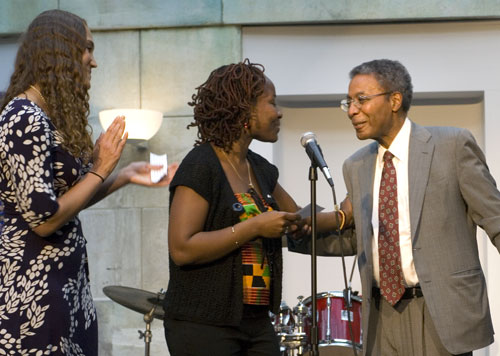
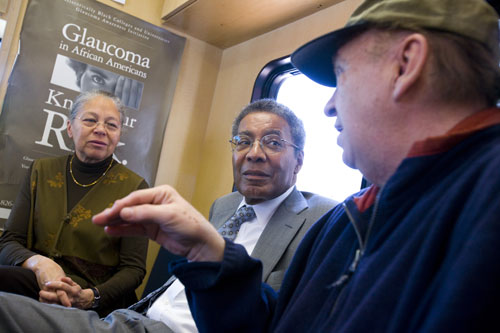
“Transcending Boundaries: A New Sunrise” was the title of Fabric 2009, a show to celebrate the diversity of the HMS first-year class. Originally begun as an African fashion show, Fabric now represents various cultures and traditions while exploring the commonalities rooted in the African diaspora through dance, music, poetry and storytelling.
The student organizers dedicated this year’s show to Alvin Poussaint (right), a professor of psychiatry and the faculty dean for student affairs, for his 40 years at HMS and for his longstanding commitment to creating a diverse community of students at the School. “It is because of your struggle for equality in medicine and beyond that we have the opportunities we enjoy today,” said first-year student Shani Isaac (above left) and third-year student Stella Safo, who introduced Poussaint. “Your leadership has helped to create an institution where medicine more readily reflects the eclectic face of America.”
Academy of Arts and Sciences Elects Three from HMSThree members of the Harvard medical community were elected to the new class of American Academy of Arts and Sciences fellows, out of a total of 210. The new fellows from HMS are (from left) Paul Farmer, the Maude and Lillian Presley professor of medical anthropology and social medicine; Anjana Rao, HMS professor of pathology at the Immune Disease Institute; and Gary Ruvkun, HMS professor of genetics at Massachusetts General Hospital. Farmer, who is a cofounder of Partners In Health, focuses on community-based treatment strategies for infectious diseases in resource-poor settings, health and human rights and the role of social inequalities in determining disease distribution and outcomes. Rao’s research has been focused on the molecular mechanisms of signal transduction and gene expression in T cells and other immune cells. Ruvkun played a major role in the discovery of microRNA, and his lab also investigates longevity and fat storage. The new fellows will be inducted in a ceremony in October at the academy’s Cambridge headquarters.
Earth Day Blooms on Quad
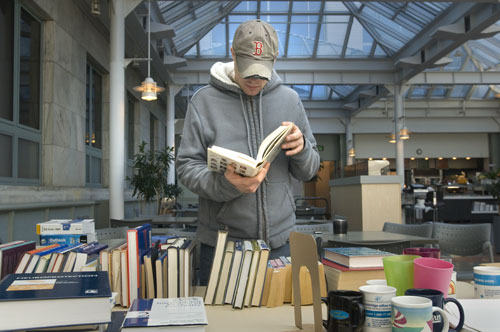
The Harvard Office for Sustainability celebrated Earth Day with a series of events meant to inspire, raise awareness and unite the Harvard community in an effort to reduce the University’s carbon footprint. On April 14, HMS participated in the semi-annual freecycle event, in which departments swap extra or unwanted office supplies. Above, Ryan Conway browses through some of the books available for freecycling.
The Mt. Trashmore exhibit demonstrated the amount of recyclable materials that are still thrown into the trash instead of the recycling bin over the course of a week on the Quad. Other HMS events included a sustainability showcase and a reusable mug sale. Across Harvard, schools celebrated with film screenings, potlucks, light bulb exchanges and lectures.
Developmental Biology Prize Recognizes Work in Muscular DystrophyThe March of Dimes has awarded its Prize in Developmental Biology to Louis Kunkel, HMS professor of pediatrics at Children’s Hospital Boston and of genetics at the Immune Disease Institute. The prize recognizes investigators whose research has profoundly advanced the science that underlies the understanding of birth defects. Kunkel, who is also a Howard Hughes investigator, and his corecipient, Kevin Campbell of the University of Iowa, are being honored for identifying the genes and proteins that cause muscular dystrophy. Early in his career, Kunkel discovered dystrophin, the gene and protein that lead to Duchenne and Becker forms of muscular dystrophy, which he later studied with Campbell. Since then, Kunkel’s lab has identified 15 dystrophin-related or associated genes and their protein products, work that has led to earlier diagnosis and treatment of these diseases, along with development of other potential treatments.
Volunteers Make the Wheels Go ‘Round