At the Feb. 21 meeting of the Faculty Council, Joseph Betancourt, HMS assistant professor of medicine, described the Cross-cultural Education Program, the progress to date, and strategies for future development. He noted that cross-cultural education was necessary for accreditation and outlined changes made to the curriculum to promote cross-cultural competency, saying he welcomed input from the faculty as they develop the Year Three and Year Four programs.
Lisa Iezzoni, HMS professor of medicine at Massachusetts General Hospital and council vice president, introduced Harvard provost Steven Hyman, who provided an overview of the search for the new dean. Hyman listed the names of the members of the advisory committee appointed by interim president Derek Bok and described their current activities, noting that the committee had looked at the needs of the HMS community before drawing an initial list of candidates. Hyman reiterated the importance of input from the Faculty Council and suggested that feedback be sent to the HMS dean’s search e-mail address, to his own personal e-mail address, or to members of the advisory committee.
Hyman said that the goal was to complete the search by June 30, noting that an interim dean may need to be appointed should the search not be completed by then.
In response to a question about a possible move to Allston prior to the appointment of a new dean, the provost noted the enormity of that decision for the University and HMS, both from a financial and a community perspective. He also cited other factors in the development of the Allston campus (for example, discussions with the City of Boston), which may influence the timing. He explained that the Allston decision would likely not be resolved by July 1, and he noted that while all perspectives will be considered, the needs of HMS will be emphasized.
Answering a question about possible regulations against building a hospital in Allston, Hyman said that there were no such barriers, noting there have been two proposals for patient facilities related to translational research, one suggesting Allston and the other Longwood. He acknowledged that this was a sensitive issue and would require further deliberation.
Hyman indicated that construction was scheduled to begin in July on Western Avenue for a series of buildings for the Department of Developmental and Regenerative Biology and that a significant investment was being made.
In response to a question about the dean search process, the provost said that the committee was looking for an individual who was interested in the entire spectrum of the medical sciences. Hyman noted that the heads of Harvard-affiliated hospitals have been very open-minded about collaborations and that the major challenge would be to make borders more porous.
Commenting on the recent publicity concerning the lack of primary-care physicians in Boston, Iezzoni asked if the committee would consider candidates’ thoughts on the types of physicians Harvard should aspire to train. Hyman noted that this problem highlights the need for a dean who is a strong fund-raiser with a broad understanding of the issues affecting the student body.
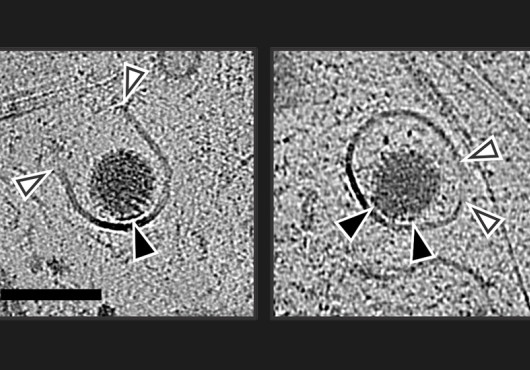
Taplin Program Equips Lab InvestigationsRecipients of grants from the inaugural Taplin Funds for Discovery Program were celebrated at a luncheon on March 12. The program provides funding for shared technology and research facilities, aspects of science for which support is often difficult to find. The program is backed by John Taplin, a longtime supporter of basic science and new technology on the Quad. HMS researchers submitted collaborative proposals, nine of which were selected for funding. Equipment purchased for Quad facilities with the Taplin funds cover the areas of mass spectroscopy and analytical chemistry, integrated computing, cryo-electron microscopy, imaging technology, and high-throughput screening. The Funds for Discovery Program will be an annual competition to help ensure that the technology needs of basic science researchers will continue to be supported. Above, Taplin offers words of congratulations to the grant recipients.
Official Urges Culture of PreparednessJohn Agwunobi, the assistant secretary for health, U.S. Department of Health and Human Services, gave a talk at the Office for Diversity and Community Partnership’s 2006–2007 Leadership Forum addressing emergency preparedness. After an introduction by Joan Reede, dean for diversity and community partnership, Agwunobi spoke about the need for a “culture of preparedness” for a broad spectrum of potential public health crises, regardless of what virus or disaster is currently making headlines. “We need to get to a steady state of preparedness across our communities at all times and delink this notion of preparedness from any given threat,” he said. Using the example of a flu pandemic, he described the challenges of planning ahead and outlined some of the strategies health officials and emergency personnel will employ. He emphasized that despite advances in vaccines and treatments since the last flu pandemic, old-fashioned methods are still the most effective, saying that “age-old public health practice” like hand-washing and social distancing have the biggest impact on limiting the spread of disease. Agwunobi also noted that the rush to support emergency preparedness after September 11 has meant that public health overall has enjoyed an increase in funding and attention. In addition to serving as assistant secretary for health, Agwunobi is the HHS blood safety officer and is a representative on the World Health Organization’s executive board.
HIV Vaccine Trials Unit at HMS Gains Funding for Seven More YearsThe HIV Vaccine Trials Unit at the Medical School, a member of the NIH-supported HIV Vaccine Trials Network, was recently awarded seven years of funding in a recompetition from the National Institute of Allergy and Infectious Diseases. The award totals $12 million with supplemental support expected for the larger vaccine studies. The unit, whose principal investigator is Raphael Dolin, the Maxwell Finland professor of medicine (microbiology and molecular genetics) and dean for academic and clinical programs at HMS, has been funded by NIAID for the past seven years.
One of the interesting aspects of the grant, said Dolin, is its multi-institutional organization. Though based at HMS, the unit runs clinical studies at Brigham and Women’s Hospital under the direction of Lindsey Baden, an HMS assistant professor of medicine, and at Fenway Community Health in Boston, under Kenneth Mayer. Michael Seaman, HMS instructor in medicine, directs the unit’s laboratory, located at Beth Israel Deaconess Medical Center.
“The unit conducts clinical trials of candidate HIV vaccines in healthy volunteers,” Dolin said. “We do phase I, II, and larger IIb trials. The initial trials study safety and immunogenicity of candidate vaccines, and the larger trials are intended to look at efficacy.”
According to Dolin, the vaccines being studied are preventive approaches to HIV infection and disease, emphasizing stimulation of T cell immunity. The most advanced candidates are based on either DNA or adenovirus, both types resulting in the introduction of HIV proteins into the body to spark an immune response. The unit also is looking at combination vaccines that use a two-pronged “prime–boost” approach to provoke immunity. One of these candidates, which has recently completed phase I testing, utilizes the adjuvant effect of interleukin-2 fused with IgG and was developed by Norman Letvin, HMS professor of medicine, and Dan Barouch, HMS associate professor of medicine, both at BID.
“We look at the efforts of this unit as part of a community response to control AIDS and to develop an HIV vaccine,” Dolin said. “It’s a tough scientific problem, but it’s the best hope for control of this dreadful pandemic.”
Leder Chair Shines Light on Genetics DepartmentThe March 22 celebration of the George Jacob and Jacqueline Hazel Leder Professorship, named after the parents of the founding head of the Genetics Department at HMS, Philip Leder (left), rose to a celebration of the department as a whole. The first incumbent of the new professorship, Clifford Tabin (right), took over from Leder as Genetics Department head on Jan. 1. After an introduction by HMS dean Joseph Martin, genetics professor Connie Cepko called Leder and Tabin “great scientists” and “absolutely wonderful human beings.” She said that Leder was very supportive from the start, and as a measure of his encouraging style, the department maintains about an 80 percent tenure rate with about 25 percent of the senior faculty being women. “Our department has grown to be the best genetics department in the world,” Cepko said, “and I would credit that to Phil.” After Jonathan Seidman, the Henrietta B. and Frederick H. Bugher Foundation professor of genetics, gave remarks, animated by a tale about Tabin’s prowess at squash, Tabin took the lectern. He addressed the audience, which included several of his college friends, thanking the genetics faculty and saying about Leder that “the entire Medical School is indebted to him.” Tabin concluded, “It is an enormous honor to hold the Leder chair.” Leder, the John Emory Andrus professor of genetics, closed the speaking program with some history about his parents who, he said, lived a classic Ellis Island story. “My parents would have been very proud of the Leder professorship,” he said. And turning to Tabin, he added, “It is a gift that will first be fashioned by you.”
Honors and Advances- Christian Arbelaez, HMS instructor in medicine at Brigham and Women’s Hospital, has been honored with the 2007 Dennis Thomson Leadership Award for his leadership skills and commitment to improving care for patients, particularly those who are intubated or mechanically ventilated. The award is named for a former BWH vice president of public affairs widely recognized for his leadership and dedication to the hospital.
- HSPH dean Barry Bloom has been awarded the Grand Cross of the Order of Makarios III by the Republic of Cyprus. The honor is given to those who have made a significant contribution to the welfare of the people of Cyprus. There, Bloom helped establish the Initiative for the Environment and Public Health, which addresses environmental issues and the promotion of ways to develop cleaner environments and healthier populations. The initiative has created new research institutions in Boston and Cyprus.
- Ilene Gipson, HMS professor of ophthalmology at Schepens Eye Research Institute, will receive the Association for Research in Vision and Ophthalmology’s (ARVO’s) Friedenwald Award, which is presented annually for outstanding research in basic or clinical science in the field of ophthalmology. Gipson is being honored for her contributions to the study of corneal disease. She will receive the award at ARVO’s annual meeting in May.
- Paula Johnson, HMS associate professor of medicine at Brigham and Women’s Hospital, will join the board of the Boston Public Health Commission. Johnson is also executive director of the Connors Center for Women’s Health and chief of the Division of Women’s Health at BWH. She replaces JudyAnn Bigby, who left the board to become Secretary of Health and Human Services for the state.
- The Radiological Society of North America has named Herbert Kressel, the Miriam H. Stoneman professor of radiology at HMS and Beth Israel Deaconess Medical Center, as the new editor of Radiology. Kressel will start his new position in January 2008.
- Sebastian Schneeweiss, HMS associate professor of medicine at Brigham and Women’s Hospital, has been honored with the American Society for Clinical Pharmacology and Therapeutics’ Leon Goldberg Young Investigator Award. The prize recognizes and encourages clinical pharmacologists at an early stage in their career.
The New York University School of Medicine has honored two HMS faculty members with a DART/NYU Biotechnology Achievement Award. Joan Ruderman and Charles Serhan were recognized in a ceremony on March 26. Ruderman, the Marion V. Nelson professor of cell biology at HMS, was presented with the Basic Biotechnology Award for research that helped lead to the understanding of the cell division cycle. Serhan, the Simon Gelman professor of anesthesia at HMS and Brigham and Women’s Hospital, received the NYU Alumnus Achievement Award for his work involving inflammation, which includes the discovery of lipoxins.
Nominations Sought for International Teaching AwardThe Klaus Peter International Teaching Award honors faculty members who have distinguished themselves—as judged by their peers—in the area of international medical education, international exchanges, and mentoring of international students, residents, and fellows at HMS. The award is named for Klaus Peter, the dean of the medical faculty at Ludwig–Maximilians University (LMU) in Munich, Germany. LMU has had a nine-year alliance with HMS, the cornerstone of which has been a student exchange program. The deadline is April 16. The 2007 recipient will be announced on April 20, with the award to be presented on May 21 at the annual HMS Teaching Award ceremony and reception. For more information, contact Teresa Cushing at teresa_cushing@hms.harvard.edu.