Long before the germ theory of disease gained widespread acceptance, physicians knew that social forces such as poverty and inequality play a crucial role in determining who gets sick, who gets better, and who dies.
Understanding these pathogenic social forces, and alleviating the suffering that they cause, has been a central focus of an ever-evolving academic department at Harvard Medical School over the course of the last 150 years.
Begun in 1871 as the Department of Hygiene, it is now known as the Department of Global Health and Social Medicine.
On Sept. 29 the department kicked off a year-long series of events to celebrate its sesquicentennial with the first of six symposia. The aim is to analyze the department’s history and to apply the department’s interdisciplinary methods to several of the world’s most pressing contemporary health challenges, including the pandemics of the 21st century and the climate crisis.
“The fundamental intuition that what occurs outside the body influences what occurs within it has been a constant throughout the department’s evolution; it continues to serve as a powerful rationale for the presence of social medicine at a medical school,” wrote Paul Farmer, the Kolokotrones University Professor of Global Health and Social Medicine and chair of the Department of Global Health and Social Medicine in the Blavatnik Institute at HMS, in a reflection on the department’s anniversary.
Observing that the ongoing COVID-19 pandemic has brought heightened attention to global health and social medicine, Farmer noted that the viral disease has “invaded the cracks and fissures in society with startling opportunism.”
Responses to the pandemic have been affected by both familiar inequalities and new ones, such as unequal access to reliable information, he added, as health care leaders grapples with gaping differences in vaccination rates, care delivery, and efforts to slow contagion across different social, economic, cultural, and political groups.
“That the contours of the COVID-19 pandemic are molded by social forces, most of them predating the virus’s emergence, should also be cause for optimism,” Farmer wrote. “Social ills are neither inevitable nor irreversible.”
Although there are still tremendous inequities to overcome, Farmer noted that over the decades the department’s faculty—in collaboration with partners across the University, within the School’s clinical affiliates, and in an array of governmental and community-based organizations around the world—have had remarkable success at improving the well-being of people living in some of the most challenging conditions imaginable. At the same time, they contributed to fundamental understandings of disease and health and trained generations of physicians, scientists, and leaders in the importance of the social aspects of medicine.
Social medicine comes to HMS
-
The department evolves: a timeline
1848 A new way of seeing health and disease
In 1848, renowned pathologist Rudolf Carl Virchow traveled to Upper Silesia, now part of Poland, to study a deadly typhus outbreak. His report detailed what he believed to be the critical social causes of the outbreak, notably the poverty and unhealthy living conditions of the people who suffered the brunt of the disease. His report is considered by many to be the founding document of a new discipline, known today social medicine.
1871 Social medicine comes to Harvard Medical School
The seeds of the history of social medicine as an academic department at Harvard Medical School were planted in 1871 when George Derby, a surgeon who had served in the Union Army during the American Civil War, is appointed professor of hygiene at Harvard Medical School, and the Department of Hygiene is created. Derby, an early leader of the Massachusetts State Board of Health, wrote about the importance of considering the “conditions in which people live, and the diseases associated with such conditions” in a monograph on the active prevention of disease, the first known publication in what would become a long line of scholarship at HMS on the importance of applying the social sciences to understand the nature of illness and health.
1913 Building the nation’s first professional public health training program
The department played a central role in creating the Harvard-MIT School for Health Officers, organized in 1913 as the first professional public health training program in the United States. The program was operated as a collaborative effort of Harvard Medical School and the Harvard School of Public Health from 1922 to 1946, when the School of Public Health became a degree-granting body independent of the medical school.
Meanwhile, the department became the Department of Preventive Medicine and Hygiene in 1909 and then Preventive Medicine in 1940.
1968 A hub for community health
In 1968, the department formed the Center for Community Health, a hub for social action, real-world research, and cross-departmental activities. The faculty and fellows of the center created projects to put their ideas into action, including a model for a prepaid clinical practice at the Massachusetts General Hospital. The center also administered medical student clerkships in the Southwest, serving Native American communities.
1970s Leading the way
Julius Richmond, who chaired the newly renamed Department of Preventive and Social Medicine from 1971–1977, put the ideals of social medicine to work for the nation, joining the Carter administration as assistant secretary of health and surgeon general from 1977–1981.
1975–1976 Culture, medicine, and psychiatry
Culture, Medicine and Psychiatry, a seminar that took place at Harvard in academic year 1975–1976, led by Arthur Kleinman, Leon Eisenberg, and Byron Good, attracted faculty and graduate students from across the University, including scholars from anthropology, sociology, political science, and the history of medicine. This was the beginning of a deepening of the relationship between the social sciences in the University’s Faculty of Arts and Sciences and the medical school.
1980 The relevance of social medicine
In 1980, Eisenberg was named the founding chair of the newly re-named department, now known as the Department of Social Medicine and Health Policy. Eisenberg built and established an interdisciplinary social science faculty in medical anthropology and the history of medicine.
In The Relevance of Social Science for Medicine, co-authors Eisenberg and Kleinman argued for social science’s importance in medicine:
“The key task for medicine is not to diminish the role of the biomedical sciences in the theory and practice of medicine but to supplement them with an equal application of the social sciences to provide both a more comprehensive understanding of disease and better care of the patient. The problem is not ‘too much science,’ but too narrow a view of the sciences relevant to medicine.”
1988 Departments of Health Care Policy and Social Medicine split into independent departments
In 1988, Harvard Medical School doubled its number of social science departments when the Department of Health Care Policy split from the Department of Social Medicine.
1989 Ethical considerations
In 1989 the department launches a new Division of Medical Ethics. The Division expanded to include a rich network of medical ethicists in the HMS teaching hospitals and public programs designed to stimulate consideration of some of the most pressing ethical issues associated with developments in contemporary biomedicine.
2001 Tightening the focus on equity
In 2001, the Department of Medicine at Brigham and Women’s Hospital created a Division of Social Medicine and Health Inequalities, with strong links to the Department of Social Medicine. The division, now known as the Division of Global Health Equity, remains an important part of the Global Health Delivery Partnership, a joint effort of the department, Brigham and Women’s, and the international health care delivery nonprofit Partners In Health.
2007 Social medicine: Required reading
In 2007, as part of a wider reform of the medical education curriculum, HMS began to require first-year medical students to take new courses, including Introduction to Social Medicine and Medical Ethics and Professionalism, which introduced students to core social science and ethical concepts.
2007 Delivering on the promise
In 2007 the department helped create the Global Health Delivery Project at Harvard, a collaboration between HMS, Brigham and Women’s Hospital, and Harvard Business School to improve the management of disease treatment and prevention by addressing the significant global health delivery gap that, despite unprecedented new financial resources and medical advances, prevents care from consistently reaching patients who need it.
2008 Global health joins social medicine
In 2008, the department was renamed Global Health and Social Medicine, reflecting growing interest in global health equity among students and faculty and better representing the world-spanning reach of the department’s research, education, and care delivery efforts.
2012 Mastering global health
In 2012 the department launched a new Master of Medical Sciences in Global Health Delivery program designed to give global health practitioners the diverse set of tools necessary to envision, manage, and deliver more equitable health care. Participants have included both HMS medical students interested in pursuing careers in global health and working practitioners from more than 30 nations who have taken their new skills back to serve their home communities.
2014 Ethics evolution
With rapidly evolving ethical questions about the ever-shifting terrain of biomedicine, HMS transformed the Division of Medical Ethics into the Center for Bioethics in 2014. The new center builds on the work of the division to better help clinicians, researchers, patients, and policymakers address the complex ethical questions that come with new discoveries and new treatment options.
The first symposium in the anniversary series outlined the historical trajectory of social medicine at HMS.
Over the years the name of the department has changed from Hygiene to Preventive Medicine and Hygiene, to Preventive Medicine, to Preventive Medicine and Social Medicine, to Social Medicine and Health Policy, to Social Medicine, and finally in 2008, to Global Health and Social Medicine.
The institutional history of social medicine at HMS began when George Derby, a surgeon in the Union army during the civil war and an early leader of the Massachusetts state board of health, was appointed founding chair of the Department of Hygiene in 1871, said Scott Podolsky, professor of global health and social medicine and director of the Center for the History of Medicine at the Francis A. Countway Library of Medicine.
Derby helped lay the foundation for the department’s intellectual history, Podolsky said. In a paper published in 1870, Derby wrote that the active prevention of disease required a focus on the “conditions in which people live, and the diseases associated with such conditions.”
Those social conditions, their relationship to illness and health, and the meanings people attach to illness are still a central focus of the department, Podolsky noted.
History lesson
Podolsky, along with David Jones, the A. Bernard Ackerman Professor of the Culture of Medicine at HMS, and Emily Harrison, research fellow in epidemiology at the Harvard T.H. Chan School of Public Health, dug deep into the archives of the medical school and its affiliated hospitals to chart the changing identity and orientation of the department and to put it into the historical, political, and cultural context of the changing times over the last 150 years.
Anthropologist Jason Silverstein, lecturer on global health and social medicine and the department’s first writer-in-residence, interviewed recent and current faculty and close colleagues to gather their observations and involvement with the department.
After the presentations, a panel of long-standing senior faculty members and leaders of the department since the 1970s helped flesh out the historical record with their personal experiences.
Byron Good, professor of medical anthropology in global health and social medicine at HMS, noted that the emphasis on global health equity embodied in the current incarnation of the department developed under the leadership of a generation of faculty members who came of age during the social movements of the 1960s and 1970s, including the Civil Rights and anti-war movements in the United States and independence movements that marked the end of colonial empires in Africa, Asia, and Latin America.
He also noted that the integration of international health care delivery organization Partners In Health into the work of the department under the leadership of Farmer and Jim Kim, who was head of the department from 2006 to 2009, helped solidify the connection between research, care delivery, and action for health equity.
“We should not be about doing great research and hoping that someone else uses it to solve the problems of the world,” Good said, citing the words of Paul Farmer. “We should be taking on the great problems of the world and using our research to help solve them.”
Allan Brandt, the Amalie Moses Kass Professor of the History of Medicine in Global Health and Social Medicine at HMS, noted that during the decades of his own association with the department, social medicine has been an effective antidote to a tendency among some in medicine to try to treat disease as a purely biological phenomenon, uncoupled from social context.
In spite of many great advances in biomedical science, very little progress has been made to address the vast disparities in care available in rich and poor countries, Brandt added.
When effective medications were developed to treat HIV/AIDS, they remained unavailable to people in Africa, the continent hardest hit by the pandemic, Brandt said, contending that these shortfalls were related to not biology, but to politics and economics.
Social medicine offered a perspective that allowed observers to see patterns in the distribution of the disease that were invisible through a biomedical lens, and to offer solutions, Brandt said.
“We can bring insights from the social sciences and the humanities that can help solve problems marginalized by the biomedical model,” Brandt said.
Mary-Jo DelVecchio Good, professor of global health and social medicine, emerita, highlighted the importance of integrating the interpretive and the applied aspects of research and care delivery, and she noted the importance of training the next generation of researchers and caregivers in this holistic approach.
Arthur Kleinman, professor of medical anthropology in global health and social medicine at HMS and the Esther and Sidney Rabb Professor of Anthropology at Harvard, emphasized the department’s crucial rule in integrating the social sciences into the medical school and building bridges between the University’s Faculty of Medicine and Faculty of Arts and Sciences.
In his closing remarks, Farmer said his vision of social medicine was expansive and inclusive.
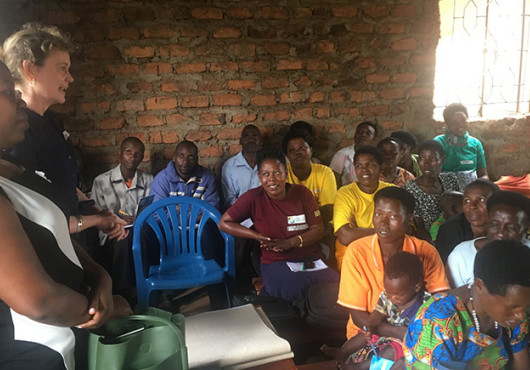
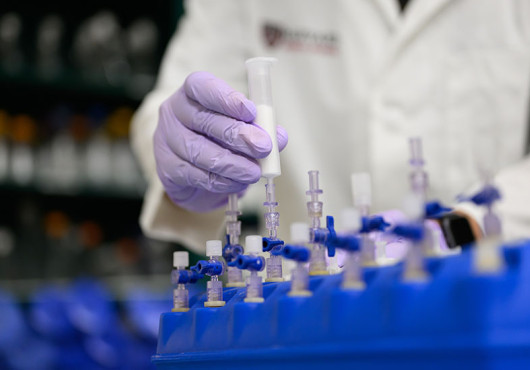
Today, department faculty includes anthropologists and epidemiologists, clinicians and statisticians, historians and surgeons. Their work spans the entire biosocial spectrum—from mapping the evolution of drug-resistant strains of tuberculosis using gene sequencing to helping build contact-tracing programs that incorporate social supports which help vulnerable families quarantine and isolate safely during the COVID-19 pandemic.
“When people come to us looking for care, comfort, or cure, we’re not going to pit biomedical against social. We’re not going to pit prevention against treatment,” Farmer said. “It’s all one medicine.”