 Catherine Stamoulis, HMS assistant professor of radiology at Children’s Hospital Boston, was awarded one of 36 National Science Foundation Early Concept Grants for Exploratory Research (EAGER). The grants are designed to enable new technologies to better understand how complex behaviors emerge from the activity of brain circuits. Stamoulis will receive $300,000 over a two-year period. The awards, totalling $10.8 million in early concept grants for brain research, will contribute to NSF’s growing portfolio of investments in support of President Obama’s BRAIN Initiative, a multi-agency research effort that seeks to accelerate the development of new neurotechnologies that promise to help researchers answer fundamental questions about how the brain works.
Each NSF EAGER award is for $300,000 over a two-year period. The researchers receiving the awards, many first-time NSF grantees, will develop a range of conceptual and physical tools, from real-time whole brain imaging, to new theories of neural networks, to next-generation optogenetics.
In March, NSF asked researchers to submit ideas for early-stage, potentially ground-breaking new approaches to reveal how neuronal processes in the brain lead to complex behaviors in any organism. NSF reviewed the summaries and invited full proposals from applicants whose ideas best aligned with the outlined research topics. Five ofNSF’s scientific directorates were involved in funding the final selections.
EAGER awards, a funding mechanism within NSF’s merit review system, are intended for short-term, proof-of-concept projects with high-payoff prospects.
 Sandeep Datta, assistant professor in the HMS Department of Neurobiology, was one of four researchers honored as a 2014 Vallee Young Investigator.
The Bert L and N Kuggie Vallee Foundation funds originality, innovation, and pioneering work. The Young Investigator Award recognizes the future promise shown by these men and women who are passionately dedicated to deciphering complex biological phenomena. Each researcher received $250,000 to spend over five years for their basic research.
Datta is working on the development and function of neural circuits. He uses a combination of behavioral analysis, functional imaging, genetics and optogenetics to characterize the structure and function of discrete neural circuits that couple signals such as those signifying the presence of food, predators or mates, to appropriate behavioral outputs.
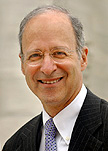 Jules Dienstag, HMS Dean for Medical Education and the Carl W. Walter Professor of Medicine at HMS and Massachusetts General Hospital, has been awarded the 2014 Distinguished Achievement Award by the American Association for the Study of Liver Diseases.
The award is given to an individual in honor of his or her sustained scientific contributions to the field of liver disease and the scientific foundations of hepatology.
As a hepatologist, clinical investigator, and teacher, Dr. Dienstag has devoted his career to the understanding, prevention, and management of viral hepatitis. He participated in early studies to define the virology and epidemiology of hepatitis A; his studies on hepatitis B spanned epidemiology, immunology, vaccine development, and antiviral therapy, including leadership of clinical trials of the first successful oral hepatitis B antiviral nucleoside analog; and his studies on hepatitis C bridged its recognition to curative antiviral therapy. He has published 178 peer-reviewed papers and 209 chapters, reviews, and editorials; been a member of the HEPATOLOGY editorial board; and served as Associate Editor of Gastroenterology.
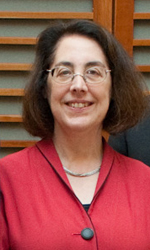 Arlene Sharpe, HMS George Fabyan Professor of Comparative Pathology and Gordon Freeman, HMS associate professor of medicine at Brigham and Women’s Hospital and Dana-Farber Cancer Institute, along with Tasuku Honjo of Kyoto University School of Medicine and Lieping Chen of Yale University School of Medicine, were selected by a committee of scientists at the Cancer Research Institute to receive the 2014 William B. Coley Award for Distinguished Research for their collective contributions to the discovery of the programmed cell death-1 (PD-1) receptor pathway, a new immune system checkpoint that has been shown in clinical studies to be a highly promising target in cancer immunotherapy.
PD-1 is the second immune system checkpoint to be discovered and utilized in cancer immunotherapy. The first, CTLA-4, was discovered by scientists in the late 1980s, and shown in the mid-1990s to be a useful target for cancer immunotherapy by former Coley Award winner James Allison, Ph.D. Allison’s work established the concept of checkpoint blockade therapy—often described as “taking the brakes off” the immune response—and led to the development of the first checkpoint inhibitor drug, ipilimumab (Yervoy®), an anti-CTLA-4 monoclonal antibody approved by the FDA for use in melanoma in 2011.
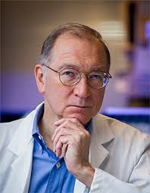 The discovery of a second immune checkpoint paved the way for the development of a new set of checkpoint inhibitor drugs: nivolumab (Bristol-Myers Squibb), pembrolizumab (Merck), MPDL3280A (Genentech), and MEDI4736 (MedImmune/AstraZeneca). Some of these drugs target the PD-1 receptor itself, while others target the ligand PD-L1 (B7-H1). The effectiveness of PD-1 checkpoint inhibitor drugs in treating several types of deadly cancer, including melanoma, non-small cell lung cancer, head and neck cancer, bladder cancer, and kidney cancer, has generated a great deal of excitement among oncologists and immunologists, and fueled a renewed sense of optimism about the power of immunotherapy to treat cancer.
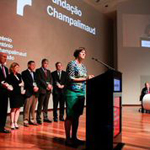 Six Harvard Medical School (HMS) researchers were among the recipients of the 2014 António Champalimaud Vision Award, the highest distinction in ophthalmology and visual science.
The award was given for the development of anti-angiogenic therapy for retinal disease. The HMS researchers include Joan Whitten Miller, HMS Henry Willard Williams Professor of Ophthalmology and head of the Department of Ophthalmology at Mass. Eye and Ear , Evangelos Gragoudas, HMS Charles Edward Whitten Professor of Ophthalmology at Mass. Eye and Ear, and Patricia D’Amore, HMS Charles L. Schepens Professor of Ophthalmology at Schepens Eye Institute and Mass. Eye and Ear, Lloyd Aiello, director of the Beetham Eye Institute and HMS professor of ophthalmology Mass. Eye and Ear and Joslin Diabetes Center, George King, chief scientific officer and senior vice president of Joslin Diabetes Center and professor of medicine at HMS; and Anthony Adamis, of Genentech, who is also an HMS lecturer on ophthalmology and Mass. Eye and Ear. Napoleone Ferrara, of University of California, San Diego School of Medicine and Moores Cancer Center, also received the award.
The 2014 António Champalimaud Vision Laureates were honored on Sept. 10, 2014 during a ceremony held at the Champalimaud Centre for the Unknown in Lisbon, Portugal. Presiding at the ceremony was His Excellency Aníbal António Cavaco Silva, President of the Portuguese Republic.
Established by The Champalimaud Foundation in 2006, the António Champalimaud Vision Award honors outstanding contributions to the preservation and understanding of sight. In even-numbered years, the award is given for vision research, and in alternate years it recognizes efforts to alleviate visual problems in developing countries or through humanitarian endeavors.
Hermant Thatte, associate professor of surgery at Brigham and Women’s Hospital and VA Boston Healthcare System, had the figures from his paper, “Subnormothermic Preservation in Somah: A Novel Approach for Enhanced Functional Resuscitation of Donor Hearts for Transplant”, featured on the cover of the the American Journal of Transplantation (AJT) for the October 2014 issue. This honor is a testament to the quality of the work and its likely impact on the field.
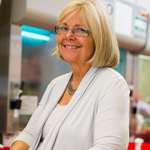 Joan Brugge, Louise Foote Pfeiffer Professor of Cell Biology and co-director of the Ludwig Center at Harvard Medical School, is being honored as this year’s recipient of the prestigious Susan G. Komen® Brinker Awards for Scientific Distinction in Basic Science.
Brugge, who is also a Komen Scholar, is being recognized for her significant contributions to breast cancer research, which have been essential in advancing our understanding of the molecular and cell biology of breast cancer. Her creative approach to tackling questions in breast cancer biology has resulted in critical insights into the cellular processes and pathways that are involved in the normal development of breast cells, as well as breast cancer initiation, progression, and response to therapy.
Mitch Dowsett, Head of the Academic Department of Biochemistry at the Royal Marsden Hospital, Professor of Biochemical Endocrinology, and Head of the Center for Molecular Pathology at the Royal Marsden Hospital and Institute of Cancer Research in London, England, will receive the Brinker award for clinical research.
Brugge and Dowsett will deliver keynote lectures on Dec. 10 at the 37th annual San Antonio Breast Cancer Symposium, a major international gathering of breast cancer researchers, clinicians and patient advocacy organizations from around the world.
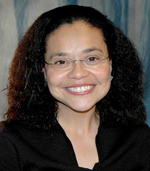 Kimberlyn Leary, HMS associate professor of psychology and chief of psychology in the Department of Psychiatry at Cambridge Health Alliance has been selected to participate in the 2014-2015 Robert Wood Johnson Foundation Health Policy Fellows program. Leary is one of seven individuals chosen for the year-long residential fellowship in Washington, DC, where she will contribute to health policy development at the federal level. She will begin her fellowship in September. The Robert Wood Johnson Foundation Health Policy Fellows program is the nation’s most prestigious learning experience at the nexus of health science, policy, and politics. Exceptional midcareer health professionals and behavioral and social scientists actively participate in health policy processes at the federal level and gain exclusive, hands-on policy experience. More than 200 fellows from across the nation have participated in the program since 1973.
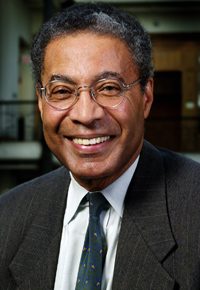 Alvin Poussaint, HMS professor of psychiatry and faculty associate dean for student affairs was honored August 2 by the W. Montague Cobb/National Medical Association Health Institute with the Cato T. Laurencin Lifetime Research Award at the NMA conference in Honolulu. The award reads: “In recognition of the depth of your contributions to the mental health of children of color, afflicted by the disease of racism as they strive for greatness and success.” The NMA established the W. Montague Cobb/NMA Health Institute (Cobb Institute) to develop, evaluate, and implement strategies to promote wellness and eliminate health disparities and racism in medicine.
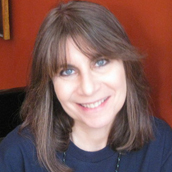 Shelley Hurwitz, HMS assistant professor of medicine at Brigham and Women’s Hospital and director of Biostatistics in the Brigham and Women’s Center for Clinical Investigation., was honored as a fellow of the American Statistical Association.
Hurwitz was recognized for advancing the ethical practice of statistics, for outstanding contributions to statistical consulting and models for consulting services, for exemplary mentoring of researchers and clinical faculty and for excellent and sustained contributions to medical research in the field of statistics.