 Adam Bass, HMS assistant professor of medicine at Dana-Farber Cancer Institute, received a 2012 Doris Duke Clinical Scientist Development Award. Bass’ project title is “Targeting SOX2-Driven Squamous Cell Carcinoma.” The award provides funding for physician-scientists who are establishing their own research teams, enabling them to secure 75 percent of their professional time for clinical research.
Four members of the HMS community received Burroughs Wellcome Fund awards. The fund is an independent private foundation dedicated to advancing the biomedical sciences by supporting research and other scientific and educational activities.
 Jonathan Kagan, HMS assistant professor of pediatrics at Boston Children’s Hospital, received a Burroughs Wellcome Investigators in the Pathogenesis of Infectious Disease award. The award is intended to give recipients the freedom and flexibility to pursue high-risk projects and new avenues of inquiry. Kagan’s project on novel approaches for studying RIG-I–like receptor mediated antiviral immunity.
Three HMS faculty members received Burroughs Wellcome Career Awards for Medical Scientists. These awards are given to help physician-scientists obtain a faculty position and continue conducting research.
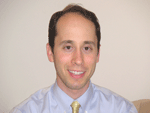 Benjamin Gewurz, HMS instructor in medicine at Brigham and Women’s Hospital, received the award for his project on identification of novel NFkB pathway components important for lymphomagenesis.
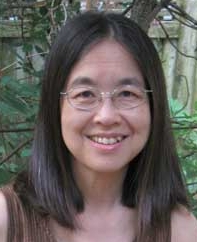 David Ting, HMS instructor in medicine at Massachusetts General Hospital, received the award for his project on characterization of noncoding RNAs in pancreatic adenocarcinoma.
Hao Zhu, HMS instructor in medicine at Dana-Farber Cancer Institute, received the award for his project on investigating the Lin28/let-7 pathway in mouse models of liver cancer and regeneration.
Research to Prevent Blindness (RPB) awarded three grants to the HMS community. This organization is the leading volunteer health organization supporting eye research directed at the prevention, treatment or eradication of all diseases that threaten vision.
Massachusetts Eye and Ear and the HMS Department of Ophthalmology received a grant from RPB. This grant will support research into the causes, treatment and prevention of blinding diseases. Joan Miller, the Henry Willard Williams Professor of Ophthalmology and head of the Department of Ophthalmology at Mass Eye and Ear will direct the research.
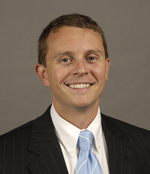 Joseph Ciolino, HMS instructor in ophthalmology at Mass Eye and Ear, received a Research to Prevent Blindness Career Development Award. Ciolino’s research interests include translational projects such as keratoprosthesis and ocular drug delivery.
Tatjana Jakobs, HMS assistant professor of ophthalmology at Mass Eye and Ear, received the Dolly Green Scholar Award. The award was established to help physician-scientists pursue promising scientific leads and opportunities for which other funds are not readily available. Jakobs’ research focuses on the causes of optic nerve death in glaucoma.
Three members of the HMS community receive Damon Runyon Cancer Research Foundation awards
Li He, HMS research fellow in genetics, received a Damon Runyon Fellows Award. This three-year award is presented to outstanding postdoctoral scientists conducting basic and translational cancer research in the laboratories of leading senior investigators across the country. The award encourages the nation’s most promising young scientists to pursue careers in cancer research by providing them with independent funding to work on innovative projects.
He, working in the lab of Norbert Perrimon, HMS professor of genetics, is studying how organ size and quality are controlled. Cell competition is a phenomenon by which cells possessing unequal “fitness” compete with each other during tissue growth or regeneration. Activation of apoptosis (programmed cell death) in the “loser” cells in turn triggers compensatory proliferation of the “winners.” This process can eliminate tumor cells at an early stage; however, itå may also be hijacked by cancer cells to invade healthy tissue. He’s goal is to generate a comprehensive understanding of signals that govern this process.
Laura Pontano Vaites, research fellow in cell biology, received a Damon Runyon Fellows Award. Pontano Vailes works in the lab of J. Wade Harper, Bert and Natalie Vallee Professor of Molecular Pathology in the Department of Cell Biology,where she focuses on the autophagy pathway, a critical regulatory network that allows cells to recycle cellular components to survive nutrient-depleted conditions. Deregulation of autophagy leads to diseases, including cancer. The proposed work will provide detailed insight into the dynamics and organization of complexes required for autophagy and how this organization may be disrupted in cancer.
Ryan Corcoran, HMS instructor in medicine at Massachusetts General Hospital, has received a Damon Runyon Clinical Investigators Award. This prestigious three-year award is given to outstanding early-career physician-scientists conducting patient-oriented cancer research at major research centers under the mentorship of the nation’s leading scientists and clinicians. Corcoran’s project title is “Defining novel targeted therapy combination strategies for BRAV V600 mutant colorectal cancer.”
Two faculty members will be recognized as distinguished scientists at the American Heart Association Scientific Sessions 2012 in November.
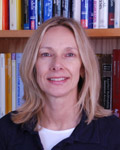 Sharon-Lise Normand is HMS professor of health care policy and HSPH professor of biostatistics. Normand’s primary area of interest is statistical methods for health services research, primarily using Bayesian approaches to problem solving, including assessment of quality of care, methods for causal inference, provider profiling, meta-analysis, circulatory system devices and latent variable modeling. She has developed a long line of research on methods for the analysis of patterns of treatment and quality of care for patients with cardiovascular disease in particular. Normand has also developed analytical approaches for comparing providers using outcomes and process-based measures. Normand is being recognized as a distinguished scientist because she is among a handful of individuals who have a major influence on how the quality and utilization of health care in the United States is measured, reported and delivered.
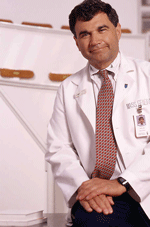 Warren Zapol is HMS Reginald Jenney Professor of Anaesthesia at Massachusetts General Hospital and a member of the affiliated faculty of the Harvard-MIT Division of Health Sciences and Technology.Zapol’s scientific vision led to rapid translation of findings in experimental animal models to benefit patients with a broad spectrum of cardiovascular diseases. Zapol began his research career with post-doctoral training at NIH from 1967 to 1970. During this time he made pivotal contributions to the development of a novel membrane oxygenator that were quickly translated to the treatment of babies and adults with respiratory failure. Over the past 20 years, his laboratory has focused on the physiological and pathophysiological roles of nitric oxide. Based on his lab’s pioneering studies, inhaled nitric oxide is now used to treat approximately 30,000 patients per year in the U.S. to dilate the pulmonary circulatory system and to augment arterial oxygenation. For many hypoxic infants and for children post-heart surgery, this inhaled therapy is lifesaving. Zapol is being recognized as a distinguished scientist because his seminal observations are nothing short of groundbreaking, and he represents a role model for every clinical scientist.
 Bradley Hyman, the John B. Penney Jr. Professor of Neurology at HMS and the director of the Massachusetts Alzheimer’s Disease Research Center at Massachusetts General Hospital, received the Henry Wisniewski Lifetime Achievement Award. Hyman’s clinical career is devoted to the care of patients with dementia. His laboratory is pursuing research in Alzheimer’s disease (AD) and other neurodegenerative diseases with a goal of understanding the neuropathophysiologic and genetic factors that underlie dementia. His laboratory is developing methods to examine clinicopathological correlates and biomarkers in AD, as well as animal and cell models to explore the natural history of the diseases. A recent focus has been the use of advanced microscopy methods—including multiphoton microscopy for in vivo imaging of plaques, tangles and synuclein aggregates, as well as FRET methods to detect protein-protein interactions and protein conformation.

Bruce Chabner, HMS professor of medicine and the director of the clinical center at Massachusetts General Hospital, was awarded a doctorate of the university from Queen’s University in Belfast, Northern Ireland for services to science and medicine. He is an internationally renowned medical oncologist and cancer pharmacologist who has devoted his medical career to clinical research and the improvement of patient care.
Delivering the citation to Chabner, Patrick Johnston, dean of the School of Medicine, Dentistry and Biomedical Sciences at Queen’s, said “One of the major features of Dr. Chabner’s career has been his focus on the improvement of treatments for patients, which remains his major goal. Both his clinical and research work have led to significant advances in patient treatment and improvements in the quality of care provided to patients during both his time at the National Cancer Institute and, more recently, at Harvard Medical School. He has been an inspiration to many leading U.S. and international oncologists and cancer specialists who have gone on to implement his legacy of quality cancer care throughout the world.”
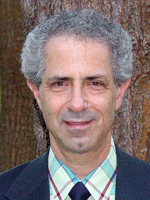
David Osser, HMS associate professor of psychiatry at the Veterans Affairs Boston Healthcare System Department of Psychiatry, was the recipient of the 2012 American Psychiatric Association and the American Association of Chairs of Departments of Psychiatry Research Mentorship Award. The award was given in recognition of substantial and formative contributions to the mentoring of students and residents throughout a distinguished career in psychiatric research.
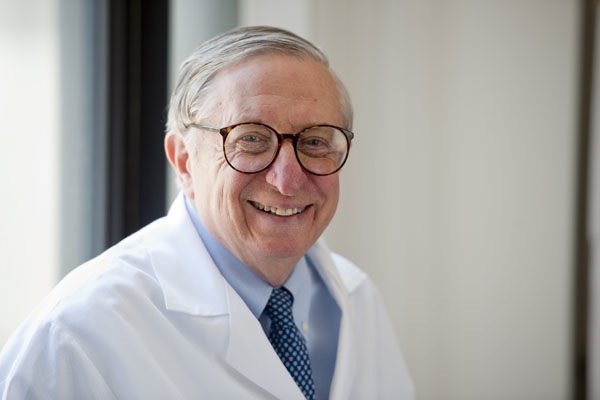
Eliot Berson, HMS William F. Chatlos Professor of Ophthalmology at Massachusetts Eye and Ear, recently received a Foundation Fighting Blindness Visionary Award. The award was presented to Berson for his important role in research to advance the understanding of potentially blinding diseases and for the development of the first treatment for retinitis pigmentosa.
Berson has served as director of Mass. Eye and Ear Electroretinography Service since 1970, and as director of the Berman-Gund Laboratory for the Study of Retinal Degenerations at Mass. Eye and Ear since 1974.
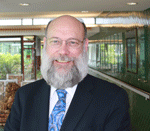
Frederick Rowland, medical director of Long-Term Care and Clinical Operations at Hebrew Rehabilitation Center in Boston and at NewBridge on the Charles in Dedham and an HMS instructor in medicine at Beth Israel Deaconess Medical Center, was recognized as Mentor of the Year by the Harvard Medical School Multi-Campus Fellowship in Geriatric Medicine program. Rowland was honored for having the greatest positive impact on the Fellows’ academic experience over the last year.