Seven Harvard Medical School faculty members were among 84 researchers selected by the Howard Hughes Medical Institute (HHMI), the Simons Foundation and the Bill and Melinda Gates Foundation as the inaugural group of Faculty Scholars: early-career scientists who have demonstrated significant research accomplishments and/or who have great potential to make unique contributions to their fields.
The HMS awardees and their work are:
Thomas Bernhardt, professor of microbiology and immunobiology
HHMI-Simons Faculty Scholar
Bernhardt is interested in finding out how bacteria build their cell walls in order to grow and divide. By identifying key enzymes in cell-wall synthesis, his research could help combat drug-resistant infections by providing new targets for future antibiotics.
Fernando Camargo, professor of stem cell and regenerative biology
HHMI Faculty Scholar
Camargo’s work with adult stem cells has helped describe the Hippo pathway, a stem cell regulatory system that controls the growth of organs and tumors. He also developed a new strategy that uses transposons to track stem cell lineages in situ, allowing him to investigate how blood cells are produced in bone marrow.
Benjamin Ebert, HMS associate professor of medicine at Brigham and Women’s Hospital
HHMI Faculty Scholar
Ebert employs a range of genomic, cellular and molecular biology techniques to investigate the basis of human disease, with an emphasis on hematopoietic malignancies and disorders of red blood cell production. He is also interested in identifying and developing small molecules that could be used to treat cancer and hematologic disorders.
Chenghua Gu, associate professor of neurobiology
HHMI Faculty Scholar
Gu is studying how the blood-brain barrier forms and functions. Better understanding of this nearly impermeable barrier could make it easier to deliver drugs to the brain. She is also exploring how neural activity influences the development and function of the blood vessels that supply the brain.
Stephen Liberles, associate professor of cell biology
HHMI Faculty Scholar
The vagus nerve connects the brain to many of the body’s internal organs, controlling breathing, heart rate, appetite, blood pressure and other functions. Liberles is studying how the vagus nerve detects and alerts the brain to diverse stimuli such as nutrients ingested during a meal, inhaled respiratory gases, and toxins and irritants that cause nausea or cough.
Jayaraj Rajagopal, HMS associate professor of medicine at Massachusetts General Hospital
HHMI Faculty Scholar
Tissue regeneration requires significant coordination among numerous cell types. Rajagopal’s research is driven by the desire to understand this finely choreographed process. He employs an outside-the-body model of lung regeneration to analyze the principles that govern cellular ensembles in organs and human disease.
John Rinn, professor of stem cell and regenerative biology in the Faculty of Arts & Sciences at Harvard University
HHMI Faculty Scholar
Rinn was one of the first to discover that the human genome hosts thousands of new long-noncoding RNA genes. He has dedicated his research to understanding how these genes contribute to human health and disease. He further aims to dissect the molecular grammar guiding their functional roles in hopes of finding new avenues of therapeutic intervention.
HHMI, the Simons Foundation and the Bill & Melinda Gates Foundation joined forces to create the Faculty Scholars program in response to growing concern about the significant challenges early-career scientists face as competition for grant support intensifies.
“This program will provide these scientists with much-needed, flexible resources so they can follow their best research ideas,” said David Clapham, HHMI vice president and chief scientific officer.
Awardees will each receive between $100,000 and $400,000 per year for five years and must devote at least 50 percent of their total effort to conducting research.
 Beth Stevens, HMS assistant professor of neurology in the F.M. Kirby Neurobiology Center at Boston Children’s Hospital, was selected to receive the 2016 Gill Transformative Investigator Award in September at the annual symposium of the Linda and Jack Gill Center for Biomolecular Science. Stevens and Ben Barres of the Stanford University School of Medicine will be honored for their groundbreaking work on glial cells in the brain.
Long considered supporting cells, glia are now thought to have important metabolic functions, owing in part to the work of Barres and Stevens.
“Beth Stevens has already been recognized for pushing the boundaries of her field with her innovative and influential research,” said Andrea Hohmann, Gill Chair of Neuroscience and professor in the IU Bloomington Department of Psychological and Brain Sciences. “She identified immune mechanisms which prune synapses and alter the wiring of the brain at a time when no one expected this to occur in a normal brain.”
Stevens is also a member of the Broad Institute of MIT and Harvard. She will present a lecture titled “Immune Mechanisms of Synapse Loss in Health and Disease” at the symposium.
 Isaac Kohane, chair of the Department of Biomedical Informatics at HMS, was selected to receive a 2016 Signature Award by the American Medical Informatics Association in recognition of significant contributions to the field of informatics. He will receive the 2016 William W. Stead Award for Thought Leadership in Informatics at the organization’s annual symposium in November.
Kohane, who is also the HMS Marion V. Nelson Professor of Biomedical Informatics, develops and applies computational techniques to address disease at multiple scales from whole health care systems to the functional genomics of neurodevelopment with a focus on autism.
Kohane’s i2b2 project is currently deployed internationally to over 120 major academic health centers to drive discovery research in disease and pharmacovigilance, including providing evidence on drugs that ultimately contributed to the FDA implementing black box warnings to protect consumers.
 John Flanagan, professor of cell biology at HMS, has been named, with three others, as a recipient of the 2016 António Champalimaud Vision Award for work that has illuminated our understanding of the way in which our eyes send signals to the appropriate areas of the brain. Developed by Flanagan, Christine Holt of the University of Cambridge, Carol Mason of Columbia University and Carla Shatz of Stanford University, this work may offer hope of fighting vision disorders by means of neurological therapies.
When retinal projections are not formed correctly, vision formed in the brain becomes abnormal and our ability to see is greatly impaired. The link that the 2016 António Champalimaud Vision Award winners have established between the eyes and the brain opens up the potential to cure certain vision disorders via neurological treatments. Therapies targeting the brain and its capacity to accurately receive projections from the retina may therefore hold the key to unlocking new types of treatment and to bringing sight to those unable to see as a result of poorly established synaptic connections.
Much of what we currently know about the cellular and molecular mechanisms involved in establishing and sculpting the patterns of retinal projections comes from the individual and collective efforts of Flanagan, Holt, Mason and Shatz. Their work has shone light on the connection between the two fundamental organs responsible for vision—the eye and the brain—and their groundbreaking work has greatly advanced our understanding of the visual system.
The António Champalimaud Vision Award, worth 1 million euros, is the largest in the world in the area of vision. The 2016 awards ceremony was presided over by the president of Portugal, Marcelo Rebelo de Sousa.
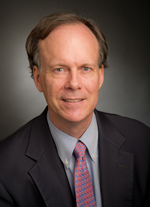 Harvard Medical School Professor of Medicine William G. Kaelin Jr. has been named a recipient of the 2016 Lasker Award for Basic Medical Research from the Albert and Mary Lasker Foundation. The Lasker is one of the world’s most prestigious biomedical research awards.
Kaelin, based at Dana-Farber Cancer Institute, was cited along with Peter J. Ratcliffe of the University of Oxford/Francis Crick Institute and Gregg L. Semenza of the Johns Hopkins University School of Medicine, for the discovery of the pathway by which cells from humans and most animals sense and adapt to changes in oxygen availability—a process essential for survival.
Kaelin’s research explores why mutations in genes known as tumor-suppressor genes can lead to cancer. His study of a tumor-suppressor gene called VHL provided key insights into the body’s response to changes in oxygen levels.
Kaelin discovered that VHL helps control the levels of a protein known as HIF, which ratchets up or down the response to low oxygen, such as in the production of red blood cells and new blood vessels.
His subsequent discovery of a molecular switch that renders HIF oxygen-sensitive was critical to the understanding of how cells react to variations in oxygen level.
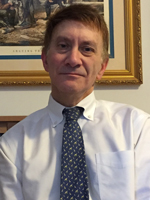 Joel Finkelstein, HMS professor of medicine at Massachusetts General Hospital, was named one of 14 leaders in endocrinology to receive the Endocrine Society’s 2017 Laureate Awards. The awards will be presented at the society’s annual meeting and expo in April.
Finkelstein will receive the Outstanding Clinical Investigator Award. This annual award honors an internationally recognized clinical investigator who has contributed significantly to understanding the pathogenesis and therapy of endocrine and metabolic diseases. Finkelstein, who is also associate director of Mass General’s Bone Density Center, has been one of the foremost researchers in male reproductive physiology and bone metabolism during the past 25 years.
His research has improved understanding of the complex relationship between gonadal steroids and bone health and has led to new approaches to therapy. Finkelstein’s latest research found that estrogen deficiency plays a major role in loss of libido and erectile function, increase in body fat, and loss of bone mineral density in hypogonadal men. These findings also have major implications for determining when hormone replacement may be appropriate in men.
Two HMS faculty members received 21st Century Science Initiative Awards in the program area Understanding Human Cognition from the James S. McDonnell Foundation, who were identified by their peers as likely to continue to make important theoretical or conceptual contributions advancing our understanding of how neurological function enables cognition and behavior.
The McDonnell Foundation’s 2016 21st Century Science Initiative Awards in Understanding Human Cognition from HMS are:
Jan Drugowitsch, assistant professor of neurobiology, who will receive $600,000 over 8 years to study the approximate computations underlying decisions based on perceptual evidence.
Brian Edlow, HMS assistant professor of neurology at Massachusetts General Hospital, will receive $600,000 over 8 years to study brainstem modulation of human consciousness.