At a glance
Researchers developed MANTIS, an AI model trained on tumor DNA profiling from 2,786 patients with medulloblastoma or ependymoma.
The model outperformed several current clinical and molecular approaches to predicting patients’ survival.
Analysis suggests that more than half of children with average-risk medulloblastoma could receive lower-dose radiation without a significant survival disadvantage.
Choosing the right treatment for a child with a malignant brain tumor requires a careful balance. Therapy must be strong enough to keep the cancer from coming back, but it can also cause lasting side effects that affect learning, development, and quality of life.
Now, an international team led by Harvard Medical School researchers at Dana-Farber Cancer Institute has developed an artificial intelligence model that may help doctors make those decisions with greater precision.
The findings published Nov. 3 in Nature Genetics.
The study describes MANTIS (Methylation profiling and Artificial Neural networks for Time-dependent Individualized Survival predictions), an AI model that uses DNA methylation profiling, a test already used to help diagnose brain tumors, to generate personalized survival predictions.
The researchers developed and tested MANTIS using existing medical data from 2,786 patients with medulloblastoma, one of the most common malignant brain tumors in children, or ependymoma, another pediatric brain tumor in which outcomes can vary widely. The model was designed to estimate the probability of survival over 10 years after diagnosis.
The team found that MANTIS outperformed current risk-prediction approaches for many patients across several large validation cohorts. Rather than assigning patients to broad risk groups, the model estimates how survival probability changes over time based on the unique biology of each child’s tumor.
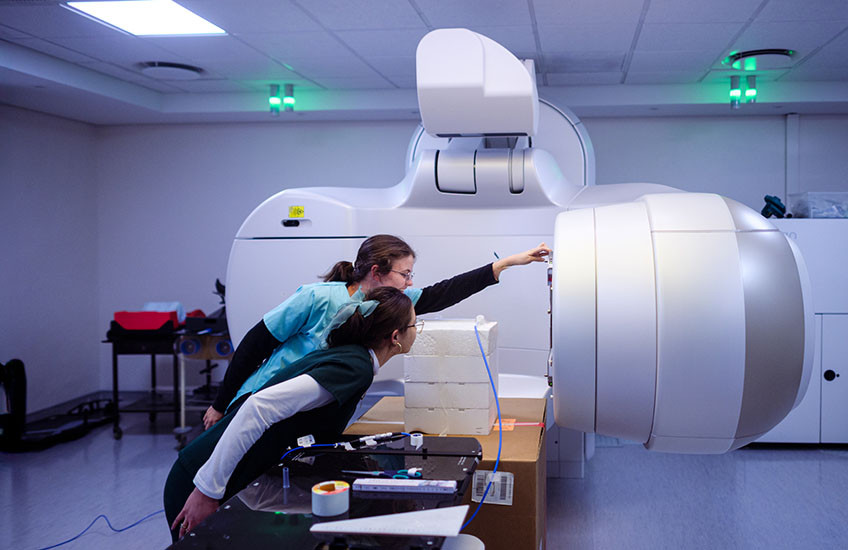
The study also points to a potential path for reducing treatment intensity in some children with medulloblastoma. When the researchers adapted MANTIS to estimate the likely effects of different radiation doses, the model suggested that more than half of children with average-risk medulloblastoma may be candidates for lower-dose craniospinal irradiation. In the data analyzed, lower-dose radiation was associated with better cognitive outcomes, and the researchers did not detect a significant survival disadvantage in this group.
While MANTIS was validated in large independent cohorts, prospective human trials will be needed to establish its accuracy and clinical utility, as well as to demonstrate patient benefit.
“Our goal is to move beyond broad risk categories and toward a more individualized understanding of each child’s tumor,” said Volker Hovestadt, HMS assistant professor of pediatrics at Dana-Farber and senior author of the study. “For children with brain tumors, that could help us better match treatment intensity to the biology of the disease and, ultimately, reduce long-term side effects for some patients.”
Personalized predictions
Current methods for predicting risk combine clinical and molecular features to help guide treatment. But children within the same risk group can still have very different outcomes. MANTIS was designed to capture that variation by combining genome-wide molecular data — including DNA methylation patterns (chemical tags that alter gene expression) and copy number changes (variations in how many copies of a DNA sequence a person has compared to standard) — with long-term patient follow-up.
The approach builds on information that is already being generated as part of routine tumor testing. That could make it easier over time to extract more clinical value from a diagnostic assay many centers already use, the authors said.
“One exciting aspect of this work is that it shows how artificial intelligence can learn from molecular tests that are already part of care,” said Sabina Stefan, HMS research fellow in pediatrics at Dana-Farber and first author of the study. “With further clinical study, this type of approach could help support more personalized treatment decisions not only for pediatric brain tumors but potentially for many other cancers as well.”
The researchers first developed the model for medulloblastoma before extending the same framework to ependymoma. The findings suggest that similar AI-based methods could eventually be applied to other pediatric and adult cancers in which patients with the same diagnosis can have very different clinical courses.
Adapted from a Dana-Farber news release.
Authorship, funding, disclosures
Additional authors on the paper include Amelie S. Amann, Kyle S. Smith, Fabio Boniolo, Ida Larsson, Estelle C. Pfitzer, Qian Li, Giles W. Robinson, Patrick N. Harter, William Lotter, and Paul A. Northcott.
The work was supported by the St. Jude Research Collaboratives program, the Charles H. Hood Foundation, the Children’s Cancer Research Fund, and the V Foundation for Cancer Research. The study used data from clinical trials supported by the National Cancer Institute at the National Institutes of Health (U10CA180886 and U10CA180899).