Everyone knows that top-flight research is essential to HMS’s mission. But tools and technologies determine whether research is straitjacketed by limits or soars on the wings of ample investment.
“Technologies are a critical and indispensable driving force in biomedical discovery,” said Stephen Harrison, co-chair of the advisory group recommending new investment and organization in the School’s technology infrastructure. Harrison said, for example, that a development in sequencing DNA by Walter Gilbert, “a purely technological discovery,” contributed ultimately to unveiling the human genome. “We want Harvard to be the place where future Wally Gilberts do their work, not a place that notices a Walter Gilbert elsewhere and then domesticates his discovery.”
The committee, advising Dean Jeffrey Flier in the strategic planning process, defined technological excellence to mean three things: innovating new methods of using technology; developing broad applications of those methods in collaboration with colleagues; and technology servicing and training. The committee made four sets of preliminary recommendations.
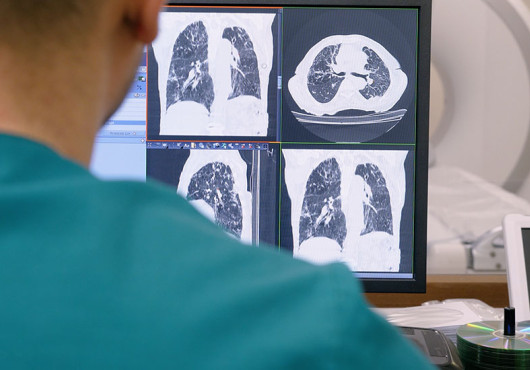
On the science end, the School should make substantial investments in “the tools and technologies of therapeutics, imaging, and computational methods, emphasizing innovative research programs, where we’re spotty, rather than application, where we’re strong,” said Harrison, a Howard Hughes investigator and the Giovanni Armenise–Harvard professor of basic biomedical science. It should also dedicate Medical School resources to bioengineering to mesh with a University-wide effort in this area. The School also needs to upgrade core facilities. For instance, breakthroughs in high-throughput DNA sequencing demand improvements to HMS technology services, and there is a need for new technology services to facilitate use of animal models, crucial in translating basic science discoveries to the patient’s bedside.
Organizationally, to implement the first batch of recommendations, the committee recommends creating an Initiative on Technology Innovation, with a budget to recruit technology faculty to the School and affiliated hospitals. The initiative would oversee a new Office of Tools, Technologies, and Facilities. This office would coordinate efforts to maintain access and quality of technology throughout the HMS community.
The committee also wants to lower barriers to technology sharing between institutions in the HMS community, from the Quadrangle to the hospitals. “The institutional diversity is wonderful,” said Harrison. “We want to get everybody playing together.” That means developing uniform standards for animal-care facilities and unimpeded transfer of models between institutions. Procedures for approving research with human subjects also need to be standardized. “We have the highest standards of human-subject approval and animal husbandry,” said Harrison. “But we also don’t want resubmissions for permission to numerous institutions.” Barriers involving intellectual property rights should be minimized, an effort that is already under way.
Finally, “we must ensure that our new faculty promotion criteria recognize contributions in discovering new technologies as they do for discovering a new molecule or new biology,” Harrison said. New promotion criteria developed by the School do, indeed, include innovation in methods, technologies, or applications as a basis for advancement.
The committee recognized the challenges of centralizing development and application of technology, and at the same time, of maintaining the individual identity of each affiliated institution, said co-chair Elazer Edelman, HMS professor of medicine at Brigham and Women’s Hospital and a faculty member in the Harvard–MIT Division of Health Sciences and Technology. “There is a universal need for faculty at the Medical School and within affiliated hospitals to have affordable access to frontier technologies,” he explained. The committee’s plan “would allow the Medical School to foster and support research without depriving individual institutions of autonomy of service to specific constituencies and needs.”
The committee did not price these recommendations; that will be a future charge to committee members or others, said Harrison. As for timetables, assembling faculty leadership for the initiative and organizing an office of technology, requiring modest resources, could be done quickly, and new promotion criteria have already been established. Finding money for technology appointments to the faculty, making these appointments, and lowering technology-sharing barriers would require more time.
The white paper detailing the preliminary recommendations from the Tools and Technologies advisory group is available on the dean’s strategic planning website. Comments on this and the other reports from the strategic advisory groups are strongly encouraged.