
Claiming Scientific Independence Through Immunology
Student Perspective | February 9, 2026
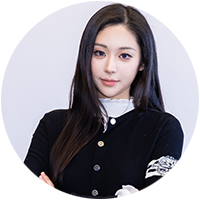
When Keying Liu joined the Master of Medical Sciences in Immunology program at Harvard Medical School, she was drawn by a deep interest in immunology and by the opportunity to spend time thinking about what kind of scientist she wanted to become. Like many students early in their research careers, she arrived with strong technical training but unanswered questions about direction and independence.
Liu earned her undergraduate degree in molecular, cell, and developmental biology from the University of California, Los Angeles. After graduating, she worked as a research assistant in a laboratory focused on translational cancer drug therapy. The experience clarified what was missing in her work: she was executing experiments and contributing to projects, but was rarely asked to shape the questions behind them. “I was doing the job,” she explains, “but I wasn’t really thinking about why or how the science could move forward.”
Uncertain whether to pursue an MD or a PhD, Liu decided that a master’s program was a good way to pause before making a long-term commitment. She applied exclusively to immunology-focused master’s programs and discovered Harvard Medical School’s Immunology program through her own research. Liu arrived on campus without prior connections to faculty, but quickly found herself immersed in an academic environment defined by intensity and access.
What stood out most to Liu was not simply the caliber of the science, but the way the program reshaped how she approached her work. “This program didn’t just teach me how to do experiments,” she says. “It taught me how to think like a scientist.” Courses spanning innate and adaptive immunity exposed her to the breadth of the field—from T cell biology and autoimmunity to dynamic cell interactions—giving her the space to identify where her interests truly lay.
Over time, Liu became particularly drawn to the role of dendritic cells in shaping immune responses. She is now completing her master’s thesis in the lab of Jonathan C. Kagan, PhD, where she studies how dendritic cells function as a critical bridge between innate and adaptive immunity in the tumor microenvironment. Often described as the “instructors” of T cells, dendritic cells influence how CD4, CD8, and regulatory T cells respond to cancer. Her research examines how these interactions unfold in tumors and how they might be modulated to inform future immunotherapy strategies.
Liu is the only master’s student currently working in the Kagan Lab, a position that has given her significant independence. She describes Kagan as an engaged mentor who pushes her to take ownership of her work, from experimental design to big-picture scientific thinking. He also encourages her to speak up in scientific spaces where she might otherwise hesitate. “He told me not to be shy,” she recalls. “In science, you have to be brave.”
That combination of mentorship and responsibility transformed how Liu saw herself in the lab. As she spent more time designing experiments, presenting results, and thinking through research direction, the day-to-day work of science became increasingly compelling. “Once you really get into it,” she reflects, “and you dig deeper, you become more and more interested.” What began as uncertainty gradually turned into momentum.
One of the most surprising outcomes of her time in the program came as she prepared to graduate. During her second year, Liu applied to PhD programs and was accepted to continue her training at Harvard Medical School. “I didn’t think this would happen when I started,” she says. “The faculty here really support students step by step.”
Looking back, Liu draws a clear distinction between her experience in the master’s program and working solely as a research assistant. The Immunology program’s structure—its coursework, thesis milestones, and emphasis on independent thinking—pushed her to grow in ways that she had not experienced before. “This program really pushes you to become better,” she says. “It prepares you to be a future scientist.”
When asked what advice she would offer prospective students, Liu doesn’t hesitate. Ask questions. Speak up. And, as her mentor taught her, be brave in science.
Written by Bailey Merlin