
From Public Service to Global Health Delivery
Student Perspective | September 2, 2026
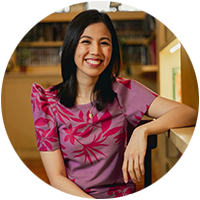
Janine Patricia Robredo, MD, MBA, MMSc, had already begun questioning what kind of physician she wanted to become when the COVID-19 pandemic brought her into public health work outside the clinic.
After earning her medical degree in the Philippines in 2020, Robredo found herself drawn to work beyond a traditional residency path. She volunteered with the Office of the Vice President of the Philippines, contributing to public health initiatives that required government agencies, private organizations, and community partners to work together under extraordinary pressure.
The experience sparked Robredo’s interest in population health and health systems and led her to apply to the Master of Medical Sciences in Global Health Delivery program at Harvard Medical School. The program stood out to her because it offered a way to examine health not only through clinical outcomes, but also through the systems, institutions, and inequities that determine whether care reaches people.
“It was still about improving population health outcomes and improving how care is delivered,” Robredo says, “but with more of a systems lens and more of an equity focus.”
Robredo entered Harvard with ambitious ideas for her thesis. Initially, she imagined studying the political determinants of health and how different government agencies coordinate to deliver basic services, but her faculty mentors encouraged her to narrow the scope.
“I think a lot of students tend to go for, ‘What is the maximum impact? What is the grandest thing that you could do while you’re in the program?’” she says. “My mentors encouraged me to focus on something that really resonated with me.”
Robredo chose the topic of childhood stunting and malnutrition in the Philippines, which allowed her to examine the systems questions that had brought her to the program. She understood that a child’s nutritional status was more than a purely clinical problem. It also reflected access to food, sanitation, social services, household income, education, and government policy.
Her thesis examined the factors contributing to persistent childhood stunting in the Philippines through that broader lens. Rather than asking only what clinical interventions were available, Robredo considered how multiple institutions and social conditions interacted around children and families.
“In my heart, it was about how do we get multiple agencies to talk,” she explains, “and how do we make them understand that this isn’t just about the doctors. It’s about the whole environment and the whole system surrounding the children.”
Peter Rohloff, MD, PhD, served as her thesis mentor. His experience working on nutrition and health systems in Guatemala gave Robredo a valuable comparative perspective even as her own research remained firmly rooted in the Philippines. “He understood that I was interested in the social determinants of malnutrition, and he still encouraged me to go that route,” she says. “I really appreciated having a mentor who understood that.”
The program’s research curriculum gave Robredo the technical tools to carry out that work. Coursework in qualitative, quantitative, and mixed methods research provided a level of formal training that she felt had been lacking in her previous educational experiences.
At the same time, technical rigor was never separated from questions of equity. “We had courses on social medicine and on what social justice is in terms of public health delivery,” she says. “It was academic, but at the same time it was, ‘Let’s talk about equity. Let’s talk about fairness.’”
That combination became one of the most valuable parts of the program for Robredo. Learning how to design a rigorous study mattered, but so did learning to ask who the study would ultimately serve.
“It was a mix of technical rigor, but viewed through a more equity and social medicine lens,” she says. “Even though the methods were there, you were thinking about how this could influence the people who need it the most.”
Ethnography added another dimension to that training. Robredo remembers the course less as a traditional class than as a series of conversations about how to enter communities, listen carefully, and recognize the assumptions that researchers may bring into the field.
That awareness shaped how Robredo approached her own research participants. Data collection, she learned, was never simply about gathering information. It required attention to relationships, context, and the humanity of the people behind each data point.
Today, Robredo is a research scientist in primary health care at Ariadne Labs, a joint center for health systems innovation at the Harvard T.H. Chan School of Public Health and Mass General Brigham. Her work spans multiple countries and areas of health systems research, including measurement and evaluation, payment reform, health workforce strengthening, digital health, and artificial intelligence.
The subject matter has changed since her thesis, but the questions have not. “How do you know that primary health care is working?” she asks. “How do you know that you’re reaching the people it needs to serve? How do you know that systems are functioning the way they should in order to deliver care and make sure that outcomes and impact are achieved?”
The program’s influence appears most clearly in how she approaches those questions. “I think that Global Health Delivery inspired me to go beyond conventional academic research and think about the people that I’m actually impacting and affecting,” she says.
As her work has become more technical and systems focused, Robredo has found herself returning repeatedly to the same ethical test. “At the end of the day, are we helping people?”
That question can be difficult to maintain in environments where efficiency, productivity, funding, and institutional priorities compete for attention. Robredo says that the program prepared her not by giving her a single answer, but by making equity something she now considers by design rather than as an afterthought.
Working across government, academic, and private institutions has taught her that meaningful change often requires compromise. Still, she tries to remain attentive to the values underlying her decisions. “I catch myself at the end of the day thinking, am I staying true to my core?” she says. “When the opportunity comes, or you create the opportunity to fight for things that you believe in, you do that as much as you can.”
That flexibility of approach was one of the program’s greatest surprises. Coming from an educational background that was highly structured and regimented, Robredo expected Harvard to offer another set of rules for how global health work should be done. Instead, faculty provided the frameworks and asked students to determine how they fit within their own context.
“There was structure, but we were encouraged to explore how that worked for us instead of how our thinking would work within the program,” she says. “It was liberating, but it was scary. When you go to school, you think that everything is straightforward.”
The Global Health Delivery program acknowledged something more complicated: students came from different countries, professions, systems, and communities. The same principles of equity and social justice could lead to very different forms of action.
“I thought we would come out of the program being hardcore activists and having similar minds of how to do things,” she says. “But it was very generous and forgiving about how we do things.”
That lesson has widened the possibilities Robredo sees for her own career. Before Harvard, she imagined that meaningful public service would probably require her to work within government. Today, she sees opportunities to advance health equity through research, academia, public institutions, private organizations, and partnerships that cross those boundaries.
“The world is my oyster,” she says with a laugh. “You shouldn’t confine yourself to a single role. Although we fight for social justice, it could look differently, and you could fight for that in different sectors.”
Her current position gives her both structure and freedom—the rigor of academic research alongside close collaboration with people implementing health programs on the ground. Still, Robredo sees her path eventually bringing her closer to the communities she hopes to serve.
That desire reflects another principle she carried from the program: the importance of accompaniment and locally grounded knowledge. Working on global projects from the United States has given Robredo a broader systems perspective, but it has also reinforced how much is lost when decision-makers become too distant from local realities.
For prospective Global Health Delivery students, Robredo recommends approaching the program with both confidence and humility. She believes that the greatest growth comes from recognizing how much remains unknown.
“Early on in the program, I had to remind myself: you don’t hold all the knowledge. Being humble enough to recognize what you don’t know and what you could learn from other people is what makes the whole experience fruitful,” she says.
For Robredo, that lesson has endured beyond the classroom. Two years after graduation, the subject of her research may have changed, the institutions around her may be different, and the scale of her work may be larger. But the question at the center remains remarkably consistent: Are the systems we build actually helping the people who need them the most?
Written by Bailey Merlin