
Building New Pathways into Clinical Research
Student Perspective | June 22, 2026
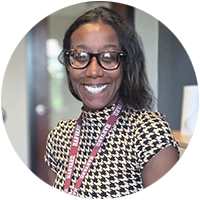
When Jovanna Schlossenberg received her acceptance letter to the Master of Science in Clinical Service Operations program at Harvard Medical School, she already knew what problem she wanted to solve.
As founder and CEO of Spectrum Clinical Research, Schlossenberg had spent years working at the intersection of patient recruitment, clinical trial operations, and community access. Her organization helped connect patients with no-cost medication and research opportunities, but the work also revealed a persistent challenge: too many patients still did not know which clinical trials were available to them, whether they might qualify, or how to move from interest to participation.
“I knew we had a major issue in our industry,” Schlossenberg recalls. In search of solutions, she began attending conferences, joining seminars, and reaching out across her network. “I really wanted to get to the bottom of understanding our field and how we could be better.”
That search eventually led her to Harvard Medical School. While exploring graduate programs, she found herself drawn to the Master of Science in Clinical Service Operations program. The curriculum included concepts that she had encountered throughout her career but had never formally studied at that level: health care finance, supply chain management, leadership, systems design, and operational strategy. “I knew that with what we had, this would be a great addition to our ecosystem,” she says.
Before entering the program, Schlossenberg had spent more than two decades working across health care and clinical research, including site operations, monitoring, regulatory affairs, patient recruitment, and clinical trial management. Yet, despite that depth of experience, she approached the master’s program as an opportunity to keep learning—and to apply that knowledge immediately.
“I treated the situation like a soldier,” she says. When faculty shared guidance about leadership, communication, or operations, she brought it directly back to her company. “I stopped in real time. I asked questions, I pivoted, and I made changes in real time.”
That cycle became one of the defining features of her experience. Coursework was not separate from her work at Spectrum Clinical Research; it became part of the company’s daily operating rhythm. Mornings and afternoons were spent in class. Later, she would check in with her team, prepare for the next day, and begin incorporating what she had just learned. “It was this volley back and forth of learning, applying, learning, applying,” she says.
The process changed more than her systems. It changed how she saw herself as a leader. As the concepts from class began producing visible results in her organization and community, Schlossenberg felt her confidence grow. “It created this sense of self-worth that I’d never had,” she says. “The things that we were putting into our community, based off of the learnings, were really working.”
Schlossenberg originally applied to the Executive Leadership pathway, but after her interview, Program Director J. Kevin Tucker, MD, suggested that the Industry Leadership pathway might better match her experience and long-term goals. Looking back, she believes that the recommendation was exactly right. “He couldn’t have placed me better,” she says.
The classroom community offered another kind of confirmation. Schlossenberg found herself surrounded by founders, clinicians, hospital leaders, and health care operators who shared her central concern: how to make care better for patients. “It was refreshing,” she says. “It felt for the first time that people were listening and that they cared.”
Those conversations were grounded in practical instruction. Faculty encouraged students to seek input from frontline teams, use their networks, and avoid leaving rooms where critical questions went unanswered. One lesson, in particular, stayed with Schlossenberg: “They told us that it’s not systems that are fragmented, but people,” she says. “I always think about my team, and how the things I do can’t be the cause of fragmentation.”
Her capstone project became the place where those lessons converged. Schlossenberg focused on developing and implementing a digital health care system designed to improve patient outcomes while reducing administrative burden in clinical research. The result was ClinMatchGO, a patient-centered platform designed to match medical records with clinical trial inclusion and exclusion criteria, then guide patients, study teams, and sponsors through the next steps of participation.
The idea emerged from the daily realities of clinical research operations. On any given day, research teams may be managing serious adverse events, patient visits, investigational products, documentation requirements, sponsor communications, and regulatory timelines. “There is nothing we do that doesn’t have an exclamation point behind it,” Schlossenberg says.
ClinMatchGO was designed to help teams navigate that urgency with more structure. The platform collects clinical information, compares it with criteria listed in clinical trial protocols, and identifies potential matches. A process that once took her team two to three weeks can now move more efficiently, allowing staff to focus on high-priority work while helping patients move closer to research opportunities.
“What I wanted to do was create all of the known storms that come in our world,” she explains, “and create an architecture that would give us a heads up, so that when it happened, we’d know what to do.”
During the capstone, she piloted the model with a breast cancer clinical trial, matching a patient’s medical record to study criteria and guiding the patient toward the physical trial site for further evaluation. Since then, the system has grown to include a database of more than 1,200 participants who can be matched to clinical trials.
Schlossenberg’s work has also expanded into decentralized research. Through a clinical trial involving Haelan 951, a fermented soybean product, her team is identifying women who are experiencing perimenopause or menopause symptoms and enabling them to participate from home. Participants receive the product remotely, share outcomes through surveys and wearable data, and contribute to research remotely.
That shift is central to her vision for the future of clinical research. Participation should not always require patients to rearrange their lives around research infrastructure. Instead, research can be designed to meet people where they are. “It’s not always about physically going on site,” she says. “It’s about changing the connotation of clinical research and putting it back in more of a positive way, and that it’s preventative and for you.”
The long-term vision extends beyond the United States. Schlossenberg is exploring partnerships in India, Ghana, Sierra Leone, Canada, and other regions, with the goal of building clinical research systems that are more accessible, representative, and sustainable across borders. “It’s way bigger than the U.S.,” she says. “We’re actually able to offer this globally, and we will in the future.”
Her capstone was supported by Harry Orf, PhD, who served as her mentor, and Mason Freeman, MD, who served as executive sponsor through Massachusetts General Hospital. Schlossenberg describes the mentorship she received throughout the program as unlike anything she has ever experienced.
“The mentorship was always available,” she says. “I never once was unable to get ahold of my mentor.” Whether through email, text, or phone, she felt supported, challenged, and guided. Feedback was direct and rigorous, but never opaque. “We were never left alone on why we were graded a certain way,” she says. “We were always given feedback.”
What surprised her most was not only the expertise of the faculty, but also their humility. “They were some of the kindest, humblest, and most highly educated people I’d ever been around in my life,” she says. The support extended beyond formal instruction into mentorship and ongoing professional connection. “It was never just one layer thick,” she says. “It always had such a deep foundation.”
Since graduation, Schlossenberg describes herself as prepared in a way that she has never felt before. The program gave her tools, language, and structure, as well as a new steadiness as she builds systems meant to connect patients, sponsors, health care institutions, and research teams. “Mondays don’t scare me anymore,” she says. “I haven’t felt like that in months. I’m so prepared.”
For prospective students, her advice is frank: read everything, use the resources, and treat the opportunity with seriousness. “You have been given an invaluable opportunity to grow your mind in a way that will forever change you and your life,” she says. “You were chosen, and it is your job to continue this level of learning in your community.”
The Master of Science in Clinical Service Operations was not simply a graduate degree for Schlossenberg. It became a framework for building what she had already begun to imagine: a more connected clinical research ecosystem, one designed around patients, sustained by better operations, and capable of bringing medical innovation closer to the communities that need it.
Written by Bailey Merlin