A $46 million grant from a new autism research initiative, Aligning Research to Impact Autism (ARIA), is turbocharging efforts at Harvard and Yale to understand human brain development and provide insight into the roots of profound autism.
ARIA’s work is aimed at accelerating discovery for people with autism who require lifelong 24/7 care, as well as those who are looking for additional support to improve their daily lives.
The new grant establishes the Human Developmental Neurobiology Hub, to be co-led by Paola Arlotta, the Golub Family Professor of Stem Cell and Regenerative Biology at the Harvard Faculty of Arts and Sciences and Harvard Medical School, and Nenad Sestan at Yale School of Medicine.
The team — which includes Marinka Zitnik, associate professor of biomedical informatics in the Blavatnik Institute at HMS — will focus on understanding and mapping how the human brain develops at the neural, cellular, genetic, and molecular levels to understand the divergences that occur in children with autism.
The researchers liken the project to a “coordinated moon mission” in place of fragmented, siloed work to map the developing brain.
“This is really a dream-come-true opportunity and collaboration,” said Arlotta, who is also an associate member of the Broad Institute of MIT and Harvard. “We have always studied things one experiment at a time, while here we’re aiming for the full picture.”
Four projects, one goal
The human brain has long posed unique challenges for researchers. It develops over many years, is risky to biopsy, and, unlike some organs, cannot be grown from a small sample.
On top of that, genetic and developmental differences across people mean there is no “single human brain,” Arlotta explained.
But cutting-edge technologies — including artificial intelligence and the study of brain-mimicking organoids that Arlotta has pioneered — are giving scientists new tools for understanding the brain. The new grant supports that mission.
The hub is comprised of four projects — two led by Sestan, one led by Arlotta, and one led by Zitnik.
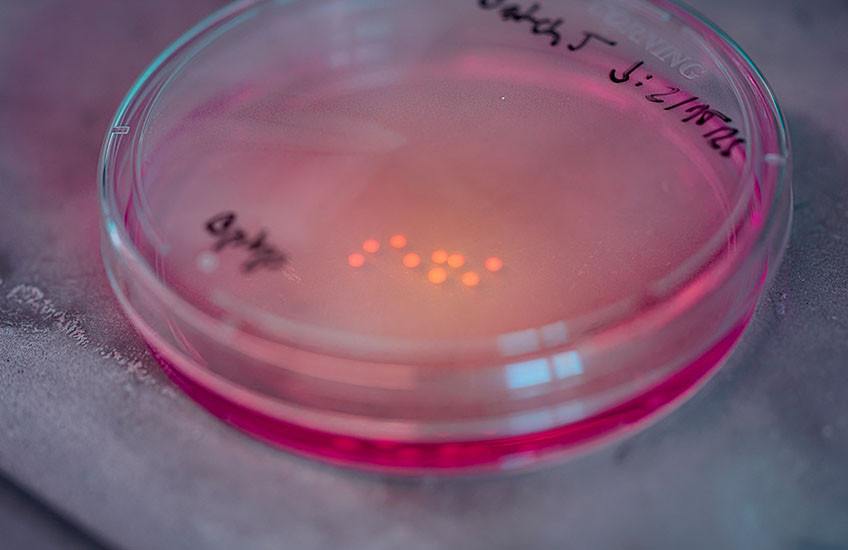
Arlotta is a pioneer in the field of organoids, deriving stem cells from blood samples and carefully guiding them over months and years into tiny clusters of specialized brain cells that progressively develop and mature, following similar mechanisms to those of a budding human brain. Each organoid is coded with the unique genetic information of the person who provided the initial blood sample.

For the new hub, Arlotta’s lab will generate 150 stem cell lines derived from patients with and without autism and develop organoids to investigate divergences between the two groups that can’t be studied directly in growing children. The stem cell lines will also be made available to other researchers in the ARIA initiative.
At Yale, one project will construct a series of high-resolution models showing how the brain develops from womb to adolescence, based on histological tissue samples from humans and primates. The other project will use human brain-cell samples to examine which genes are expressed in which cells at different stages of development.
Building a ‘virtual cell model’
All three projects will feed data to Zitnik and her colleagues, who will develop AI models to predict how brain cells carrying a particular set of genetic variants develop over time and how a drug or other intervention could alter that course.
“Our goal in this project is to build a set of computation models that will give rise to what we call a ‘virtual cell model’ of the developing human brain,” said Zitnik, who is also an associate faculty member of Harvard’s Kempner Institute for the Study of Natural and Artificial Intelligence.
Zitnik’s team will work with neuroscientists at every step to gauge whether the AI models are capturing experimental data and drawing reliable inferences — and whether the predictions from those virtual cell models match the continued development of comparison organoids in Arlotta’s lab.
Such a model could help researchers study human brain development as a continuous process, rather than the series of snapshots they’re typically limited to.
Ideally, the team will eventually be able to simulate how a person with a specific set of traits would respond to a particular drug or other treatment — a watershed moment for a condition that exists on a broad spectrum and for which there are no pharmaceutical therapies.
The Human Developmental Neurobiology Hub is one of six research hubs in the ARIA initiative. A team at Boston Children’s Hospital that includes additional HMS faculty was recently awarded up to $17.25 million as one of several clinical sites within another hub, dubbed the IMPACT Network, aimed at speeding the development of urgently needed treatments for children with profound autism and related neurodevelopmental disabilities.
Adapted from a story in the FAS Current.