Matthew Leventhal, HMS research fellow in pathology at Dana-Farber Cancer Institute, has been awarded a Quantitative Biology Fellowship from the Damon Runyon Cancer Research Foundation. Established to encourage scientists with backgrounds in mathematics, physics, computer science, and engineering to pursue careers in cancer research, the fellowship highlights the importance of these specially trained scientists in the era of precision medicine.
Leventhal will receive $240,000 in funding to train under the joint mentorship of David Pellman, the HMS Margaret M. Dyson Professor of Pediatric Oncology at Dana-Farber and professor of cell biology at HMS, and Cheng-Zhong Zhang, HMS assistant professor of pathology at Dana-Farber.
“In an era where technological capacity and access to biological datasets are increasing at a rapid pace, computational expertise is becoming even more important in cancer research,” said Yung Lie, president and CEO of the Damon Runyon Cancer Research Foundation.
“Our Quantitative Biology Fellows are already establishing themselves as interdisciplinary pioneers in the field,” Lie added.
Leventhal will investigate how the X chromosome contributes to cancer development in women. He plans to develop a new computational tool to determine which copy of the X chromosome is active in tumor cells and analyze more than 8,000 tumors across 31 cancer types. By identifying genetic changes that occur on the active X chromosome, Leventhal hopes to uncover new cancer-causing genes and weaknesses that could be targeted with future treatments. He will also examine whether these changes arise early in cancer development, potentially opening the door to earlier intervention.
Adapted from Damon Runyon press materials.
Rochelle Walensky, HMS professor of medicine, part-time, at Massachusetts General Hospital, was given the 2026 Tzedakah Lifetime Achievement Award by the Wyner Family Jewish Heritage Center (JHC).
Walensky was presented with the award during the 2026 JHC benefit dinner in June at the Lenox Hotel in Boston. The event featured Walensky in conversation with Kevin Tabb, HMS professor of medicine at Beth Israel Deaconess Medical Center, discussing her Jewish heritage, distinguished medical career, and leadership during the COVID-19 pandemic.
Brielle Ferguson, HMS assistant professor of genetics at Boston Children’s Hospital, has been named a 2026 McKnight Scholar by the McKnight Endowment Fund for Neuroscience (MEFN).
The McKnight Scholar Awards recognize young scientists in the early stages of establishing their own independent laboratories and research careers and who have demonstrated a commitment to neuroscience. The award comes with $225,000 in funding over three years.

“At a time when fundamental discovery science faces growing challenges, the McKnight Endowment Fund for Neuroscience is proud to invest in these exceptional early-career investigators whose creativity, rigor, and vision will help shape the future of the field,” said Vanessa Ruta, chair of the awards committee.
Ferguson is investigating how the brain focuses on important information, adapts to changing situations, and learns from mistakes. By using advanced genetic tools to study brain circuits in mice, she hopes to uncover the neural mechanisms of attention and adaptive behavior, providing insights that could lead to better treatments for disorders in which these processes are impaired.
Adapted from McKnight Endowment Fund materials.
Shira Weingarten-Gabbay, assistant professor of microbiology in the Blavatnik Institute at HMS, has received a 2026 Young Investigator Award from the Arnold and Mabel Beckman Foundation. The award supports promising early-career faculty members in the chemical and life sciences, particularly to foster the invention of methods, instruments, and materials that open new avenues of research in science.
Chosen from a pool of almost 400 applicants, the 12 Young Investigators will receive $600,000 each in funding over four years.
Weingarten-Gabbay was chosen for her research project, “Bioengineering Massively Parallel Platforms To Decode Viral Immune Evasion.”
Adapted from Beckman Foundation materials.
Mark Poznansky, HMS professor of medicine at Massachusetts General Hospital, has been named an Officer of the Order of the British Empire by King Charles III of the United Kingdom. Established in 1917 by King George V, appointment to the Most Excellent Order of the British Empire recognizes outstanding contributions to the arts, sciences, charitable work, and public service.
Poznansky was recognized for his service to biomedical research in the United States and the United Kingdom.
Adapted from U.K. Foreign, Commonwealth, and Development Office materials.
Two HMS early-career researchers have been chosen to join the Pew Scholars Program in Biomedical Sciences by the Pew Charitable Trusts. They were chosen from a pool of over 200 applicants nominated by their research institutions and will receive four years of funding.
“Scientific discovery is moving at a rapid pace, and now more than ever we need curious and creative researchers leading the charge,” said Lee Niswander, chair of the program’s national advisory committee. “These new biomedical scholars are prepared to meet that challenge.”
The two new Pew scholars from HMS are Corey Allard, assistant professor of cell biology at HMS, and Xin Gu, HMS assistant professor of cell biology at Dana-Farber Cancer Institute.
Allard is exploring how certain sea slugs acquire remarkable abilities by stealing cellular structures from their prey, such as chloroplasts for photosynthesis and stinging organelles for defense. By uncovering the molecular mechanisms that allow these borrowed structures to function inside slug cells, Allard hopes to reveal a unique form of evolutionary innovation that could inspire new ways to engineer cells with enhanced metabolic or protective capabilities.
Gu is researching how a newly discovered protein, midnolin, helps cells selectively dispose of gene-regulating proteins by delivering them to the proteasome for degradation. By uncovering how this pathway works and how it influences tissues such as the brain and heart, Gu hopes to pave the way for new therapies that target cancer-driving proteins once thought to be impossible to treat.
Adapted from Pew Charitable Trusts materials.
Three early-career researchers from HMS are among the 32 postdoctoral fellows recently named 2026 Jane Coffin Childs Fellows by the Jane Coffin Childs Fund for Medical Research (JCC Fund). The JCC Fund advances pioneering science by supporting postdoctoral fellows conducting fundamental research on cancer and other human diseases.
Fellows were selected based on their research accomplishments to date, their research plans, and their proposed scientific environment and mentors. The 32 fellows will receive stipends for three years, totaling nearly $9 million.
“The 2026 JCC fellows represent something we all need right now: scientists with the training, the drive, and the imagination to ask questions the rest of us haven’t thought to ask yet,” said Sue Biggins, chair of the JCC Fund’s Board of Scientific Advisors. “At a difficult moment for science, it is exciting to celebrate this cohort and invest in our future.”
The new JCC fellows from HMS are:
- Laura Blasco Chamarro, HMS research fellow in pediatrics at Boston Children’s Hospital. Working in the lab of Mariella Filbin, HMS associate professor of pediatrics at Dana-Farber Cancer Institute, Blasco Chamarro will investigate how pediatric brain tumors hijack normal developmental signals from nearby cells to drive uncontrolled growth. By identifying the signals that help these tumors keep dividing, she aims to uncover new treatment strategies that could slow tumor growth and potentially be applied to other cancers that rely on similar developmental pathways.
- Ke Liang, research fellow in cell biology at HMS. Working in the lab of Tom Rapoport, the Don W. Fawcett Professor of Cell Biology at HMS, Liang will research how cells transport proteins into peroxisomes, organelles that help break down harmful substances and maintain cellular health. By uncovering how this protein import system works, her research could improve our understanding of diseases caused by peroxisome dysfunction and identify new opportunities for future treatments.
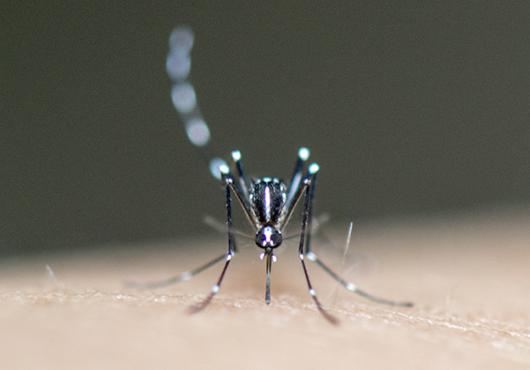
- Sasha McDowell, research fellow in biological chemistry and molecular pharmacology at HMS. Working in the lab of Josefina del Mármol, assistant professor of biological chemistry and molecular pharmacology at HMS, McDowell will study how mosquitoes detect and are attracted to human odor. She aims to identify the specific scent molecules that draw mosquitoes to people and discover ways to block that attraction, which could lead to new strategies for preventing mosquito bites and the spread of mosquito-borne diseases.
Adapted from JCC Fund materials.
Three HMS researchers are among the five recipients of the 2026 Warren Alpert Foundation Prize. The researchers were recognized for their work leading to curative genetic therapies for two major blood disorders: sickle cell disease and beta-thalassemia. These diseases affect millions of people around the world.
“The exceptional work these recipients have done to unravel the molecular mechanisms of hemoglobin disorders and improve stem cell transplantation has catalyzed the development of therapeutics that have the potential to improve the lives of millions of people,” said HMS Dean George Q. Daley.
“Their combined efforts, driven by both clinical savvy and scientific curiosity, mark the dawn of a new era of gene editing in medicine,” Daley added.
The Warren Alpert Prize recipients from HMS are:
- Stuart Orkin, the Harvard Medical School David G. Nathan Distinguished Professor of Pediatrics at Dana-Farber Cancer Institute and Boston Children’s Hospital and an investigator at the Howard Hughes Medical Institute
- Vijay Sankaran, the HMS Jan Ellen Paradise, MD Professor of Pediatrics at Boston Children’s and Dana-Farber and an investigator at HHMI
- Daniel Bauer, the HMS Donald S. Fredrickson, MD Associate Professor of Pediatrics at Boston Children’s and Dana-Farber
Three research teams led by HMS faculty have been awarded grants by the Gray Foundation to study new approaches for prevention, early detection, and interception of BRCA-related cancers. Sixteen research teams will be awarded a total of $35 million in funding over three years as part of the Gray Foundation’s Team Science program.
“The teams selected by the Foundation are taking innovative, multidisciplinary approaches to the toughest questions in the field,” said Chi Van Dang, chief science advisor for the Gray Foundation.
“The selected research proposals will have a meaningful impact in the prevention, interception, and early detection of BRCA-associated cancers,” Dang added.
The HMS grant recipients are:
- Joan Brugge, the Louise Foote Pfeiffer Professor of Cell Biology at HMS
- Dipanjan Chowdhury, HMS professor of radiation oncology at Dana-Farber Cancer Institute
- Leif Ellisen, HMS professor of medicine at Massachusetts General Hospital