
Advancing Cardiac Surgery Through Evidence Synthesis and Leadership
Student Perspective | October 28, 2026
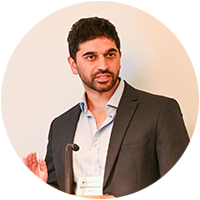
Rohan Pancharatnam, BSc, MBChB, PGCert, SM, knew early on that he wanted research to be part of his career in cardiothoracic surgery. While working in cardiac surgery in London and as an anatomy demonstrator at King’s College London, he was already thinking beyond clinical practice toward the evidence, technologies, and guidelines that shape how surgery is performed.
“My ambition has always been to combine clinical surgery with research and innovation,” he says. “I want to contribute to the development of new techniques and devices, as well as the evidence that guides how we care for patients.”
That ambition brought Pancharatnam to the Master of Science in Clinical Research program at Harvard Medical School, where he joined the inaugural cohort and graduated in 2026. He was drawn to the breadth of the curriculum and the opportunity to develop a stronger foundation across multiple areas of clinical investigation.
During his year at Harvard, Pancharatnam received the Excellence in Leadership Award, an honor he considers one of the most meaningful achievements of his academic career. The recognition was particularly significant after an intensive year spent adjusting to a new country, managing a demanding curriculum, and learning alongside clinicians and researchers from around the world.
Each term included five or six modules, with subjects ranging from statistics and clinical trials to genetics, omics, therapeutic development, and critical appraisal of the medical literature. “The breadth was one of the program’s greatest strengths,” he says. It gave him the opportunity to deepen the skills that he would need, while encountering areas of clinical research that he had not previously considered part of his career.
Clinical guideline development was one of those surprises. Learning how evidence is evaluated and translated into recommendations for clinical practice sparked an interest that has continued beyond graduation. “Clinical guideline development was an unexpected highlight of the program,” he says.
He found similar possibilities in coursework on medical devices and artificial intelligence. Pancharatnam had never coded before taking an elective in artificial intelligence, but during the course he learned to develop machine-learning programs that could distinguish between different categories of images.
These subjects complemented Pancharatnam’s existing interest in surgical innovation. He began to see more clearly how research in artificial intelligence, omics, device development, and evidence synthesis could sit alongside his clinical work in cardiothoracic surgery.
His capstone project gave him the opportunity to apply that training directly to a question in cardiac care. Pancharatnam was paired with Roger Dias, MD, PhD, MBA, director of research and innovation at the STRATUS Center for Medical Simulation at Brigham and Women’s Hospital. Dias’s research included work on AI cardiopulmonary perfusion, giving the two a natural starting point for a project related to cardiac surgery.
From their earliest discussions, Pancharatnam wanted to develop a project that would build his capabilities as an independent researcher and make a meaningful contribution to the specialty.
“I wanted to use the capstone to address a clinically important question in cardiac surgery, deepen my research skills and knowledge, and take the work through to publication so that the findings could contribute meaningfully to the field,” he says.
Together, they developed a systematic review and meta-analysis examining oxygen delivery during cardiopulmonary bypass and its relationship to acute kidney injury after cardiac surgery. Existing guidelines have used oxygen-delivery thresholds intended to reduce the risk of kidney injury. Pancharatnam and his collaborators sought to understand how consistently those thresholds were supported by the available evidence—and whether a single threshold adequately captured a complex physiological risk.
The analysis included 34 studies representing more than 44,000 patients. Rather than identifying one stable threshold across the literature, the researchers found considerable variation. Their findings highlighted the limitations of relying on a single oxygen-delivery value and supported further investigation of dynamic measures that account for the depth and duration of inadequate oxygen delivery.
For Pancharatnam, the project connected a practical challenge in cardiac surgery with the methodological training needed to examine it critically. It also marked an important transition from contributing to research projects to leading a systematic review and meta-analysis through its full lifecycle.
“Although I had previously contributed to meta-analyses, this was my first opportunity to lead one through every stage, from developing the research question and designing the review to conducting the statistical analyses and taking the manuscript through to publication,” he says.
Dias helped Pancharatnam refine the question and structure the project early in the process, then gave him substantial independence as the research progressed. “He gave me a lot of freedom to sort of design my own projects,” Pancharatnam explains. “He was keen for me to publish as well, right from the start.”
Pancharatnam also drew on expertise across the Harvard community. Christina Ellervik provided guidance on statistical analysis and meta-analysis design, and librarian Carrie Wade helped develop the literature-search strategy. He also worked with fellow student Chi Wing Kandace Chan, MBBS, SM, on the project. Those relationships have continued beyond graduation, and Pancharatnam and Chan are now collaborating on additional meta-analyses.
Pancharatnam presented the project as a finalist in the Three Minute Thesis competition and later as part of his capstone assessment. After graduation, he continued working on the manuscript with his collaborators until it was accepted for publication in JTCVS Open as “Indexed Oxygen Delivery and Acute Kidney Injury During Cardiopulmonary Bypass: Threshold Instability and Cumulative Oxygen Debt.”
Taking the project through publication reinforced another aspect of research that matters to Pancharatnam: rigorous findings have the most impact when they are communicated clearly and help inform clinical practice. His growing interest in evidence synthesis and clinical guideline development reflects that same concern with what happens after the analysis is complete.
Looking back, Pancharatnam says the breadth of the curriculum is what continues to benefit him most. Skills from different parts of the program now intersect with the work he hopes to pursue, whether evaluating literature, contributing to clinical guidelines, exploring artificial intelligence in surgery, or understanding how medical devices and therapies move toward clinical use. Of course, his goal of becoming a cardiothoracic surgeon has not changed. What has changed is the range of tools he can bring to that career.
For incoming Clinical Research students, Pancharatnam recommends beginning the capstone project early on and planning electives well in advance. He also encourages students to make room for opportunities beyond formal coursework, something he wishes that he had done more often himself. “I was determined to make the most of the academic program and held myself to a high standard in every assessment,” he says. In retrospect, he wishes he had also made more time to explore research opportunities across Harvard-affiliated hospitals.
He also advises new students to think more broadly about what can be gained from the year. Alongside coursework, he encourages students to build relationships with research teams whose work aligns with their interests.
For Pancharatnam, those opportunities now extend well beyond the program itself. He remains connected to faculty and classmates, continues collaborating on evidence-synthesis projects, and is pursuing opportunities in clinical guideline development while working toward a career in cardiothoracic surgery. The guidelines that shape care in the operating room are written by people who ask exactly those questions, and Pancharatnam intends to be one of them.
Written by Bailey Merlin