
Toward Personalized Precision Medicine
Student Perspective | May 27, 2026
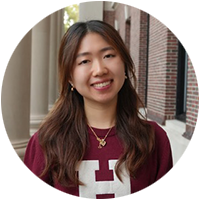
For Stephanie Chen, biomedical informatics is a way to bring the promise of precision medicine closer to clinical reality. As a second-year student in Harvard Medical School’s Master of Medical Sciences in Biomedical Informatics program, Chen is developing machine learning models to predict Alzheimer’s disease progression, combining her background in neuroscience with her growing expertise in health care data, computation, and clinical translation.
Chen’s path to biomedical informatics began with an interest in neurological disease and a desire to understand how research could improve patient care. Before enrolling at Harvard Medical School, Chen worked on Parkinson’s disease research, where she was drawn to questions of earlier detection, disease progression, and more individualized approaches to care.
“I was always exploring ways that I wanted to contribute to medicine, but I wasn’t sure what was the best way to do that,” she says. The MMSc in Biomedical Informatics program opened a door to explore those questions through computation while building the technical skills to apply machine learning to real clinical problems.
In the lab of Chirag Patel, PhD, Chen’s thesis focuses on patients with mild cognitive impairment and asks whether more accessible forms of data—including demographic information, genetic background, and blood-based biomarkers—can help estimate a patient’s risk of progressing to Alzheimer’s disease over time. Traditionally, detecting Alzheimer’s disease often has relied on imaging, which can be expensive and complex. Chen’s project explores whether more scalable, minimally invasive measurements could help clinicians better understand risk across multiple time points.
For Chen, learning about biomedical informatics has meant developing a broad computational skill set: working with health care data that is often messy and shaped by real-world clinical complexity, identifying which data are clinically relevant, understanding how machine learning models work, and evaluating results in ways that could be meaningful for clinicians and patients.
“It’s knowing how to process the data, understanding how these machine learning models work, and then being able to interpret the results that you have,” Chen explains.
The structure of the MMSc in Biomedical Informatics program is one of the main reasons that Chen was drawn to Harvard Medical School. Unlike many one-year master’s programs, the two-year format has given her the flexibility to build foundational skills through coursework and then focus solely on pursuing research.
“I actually liked that it was two years,” she says. “I thought I could build up my skill sets the first year, and then have that dedicated time in the second year to see what it feels like to do research full-time.”
That protected research time proved pivotal. Through her thesis, Chen has discovered that she not only enjoys computational research, but also wants to continue building the skills needed to lead independent projects.
The program also has given Chen room to explore beyond biomedical informatics. Through cross-registration, she has taken courses across the Harvard and MIT ecosystem, including a class at MIT on revolutionary ventures, a course at the Harvard John A. Paulson School of Engineering and Applied Sciences on building mobile web applications, and a Harvard Business School course in entrepreneurial finance.
“I’m very interested in getting more of an interdisciplinary breadth of knowledge,” she says. The opportunity to learn across schools—and to meet students working in different fields—is one of the defining features of her experience. “The connections I’ve built across this network are something I know will last well beyond the program.”
Mentorship has also shaped Chen’s development as a researcher. In Patel’s lab, she receives broad guidance from Dr. Patel and day-to-day support from her postdoctoral mentor, Randall Ellis, PhD. Ellis has helped Chen work through methodological questions, learn to use different data sets, and apply models to Alzheimer’s disease research. Patel has helped her situate the project within larger developments in the field, including the growing role of blood-based biomarkers in Alzheimer’s diagnosis and care.
“Having a day-to-day mentor, I can ask questions about the methodology and how to work with these different data sets,” Chen says. “And then with Dr. Patel, I can get broader general guidance on the latest advances in Alzheimer’s research.”
As Chen prepares to pursue a doctorate, she is thinking deeply about how to translate computational tools into clinical practice. She sees enormous promise in informatics, but is clear-eyed about the barriers that remain between model development and real-world implementation. “Right now, there are still a lot of barriers to translation,” she says. This line of inquiry is what led Chen to co-found the Harvard Medical AI Club, which is the first student organization at HMS that brings together scientists and clinicians to discuss the latest advances in AI research and how these tools can be responsibly integrated into clinical practice.
Her long-term goal is to contribute to neurological disease care through tools that can help identify disease earlier, give patients and clinicians more certainty about disease trajectory, and support a more personalized approach to treatment and planning. For conditions like Alzheimer’s disease and Parkinson’s disease, where many questions remain and cures are still limited, Chen sees early detection and individualized prediction as meaningful areas for impact.
“If there are ways to identify the disease earlier, patients can start planning earlier,” she says. “Or we can help provide them with more certainty about how the trajectory will look.”
One of the most surprising parts of the program for Chen has been the ambition and creativity of the people around her. Her classmates are launching startups, building innovative AI tools, and tackling health challenges she never expected to see addressed through informatics. That environment has expanded her understanding of what contribution can look like.
“It’s broadened my view of what it means to contribute to health care and medicine,” she says. “More traditionally, you think about being a physician, which is very meaningful. But seeing what my classmates are building has shown me just how many ways there are to move medicine forward and has inspired me to think creatively as well.”
Chen encourages prospective students to cultivate a spirit of exploration. “This program is a great way to explore, take risks, and step out of your comfort zone,” she says. “The research is very important, but make sure you explore all that Harvard has to offer.”
Written by Bailey Merlin